Completing a course of physical therapy is a major milestone. Whether you were recovering from surgery, healing after an injury, or managing chronic pain, reaching the end of your rehabilitation program often means you’ve regained strength, improved mobility, and learned exercises to continue at home.
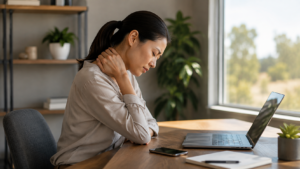
Yet many people are surprised when pain, stiffness, or tightness lingers.
You may wonder:
- “Why does my shoulder still feel tight?”
- “Why is my lower back sore even though therapy is over?”
- “Why do I feel stronger but not completely better?”
These are common questions, and the answer often lies in the difference between restoring movement and restoring soft tissue health.
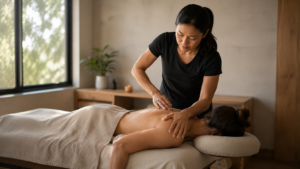
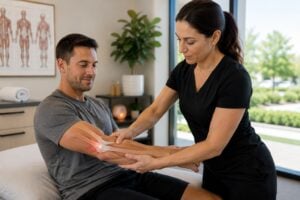
Physical therapy and massage therapy serve different, but highly complementary roles. While physical therapy focuses on rebuilding function, massage therapy addresses the muscles, fascia, connective tissues, and movement restrictions that may continue contributing to discomfort.
For many people in Pleasanton, combining these approaches provides a more complete path toward long-term recovery.
What Physical Therapy Does Well
Physical therapists are movement specialists. Their primary goal is to restore your ability to perform everyday activities safely and efficiently.
A rehabilitation program may include:
- Strengthening weak muscles
- Improving joint mobility
- Restoring balance and coordination
- Correcting movement patterns
- Increasing flexibility
- Teaching home exercise programs
- Reducing pain through therapeutic interventions
These treatments are incredibly valuable because movement is essential for healing. Stronger muscles help stabilize joints, while better movement patterns reduce unnecessary stress on injured tissues.
Many patients finish physical therapy with measurable improvements in range of motion and strength.
However, healing isn’t always complete simply because therapy sessions have ended.
Why Soft Tissue Problems Often Remain
Muscles don’t always recover at the same pace as joints or bones.
After weeks or even months of injury, surgery, or chronic pain, the body adapts in ways that protect the injured area.
These adaptations can include:
Muscle Guarding
When pain develops, muscles naturally tighten to protect the affected region.
Initially, this response is helpful.
Over time, however, persistent muscle guarding can become a source of pain itself.
Even after the original injury heals, the muscles may continue to stay contracted.
Fascial Restrictions
Fascia is the connective tissue that surrounds every muscle, tendon, nerve, and organ in your body.
When inflammation or injury occurs, fascia can become less mobile.
Instead of allowing tissues to glide smoothly, it develops restrictions that may create:
- Tightness
- Pulling sensations
- Reduced flexibility
- Limited movement
- Compensatory pain elsewhere
Because fascia connects the entire body, restrictions in one area can influence movement in another.
Trigger Points
Trigger points are small, hypersensitive areas within muscle tissue.
They often develop after:
- Surgery
- Repetitive strain
- Athletic injuries
- Poor posture
- Immobilization
These irritated muscle fibers may refer pain into completely different parts of the body.
For example, a trigger point in the shoulder can contribute to headaches, while one in the hip may create pain that travels down the leg.
Scar Tissue
Following surgery or significant injury, scar tissue is a natural part of healing.
Healthy scar tissue helps repair damaged structures.
Problems arise when scar tissue becomes dense or inflexible.
Restricted scar tissue can reduce mobility, alter muscle mechanics, and create ongoing discomfort during everyday activities.
Why Exercise Alone Isn’t Always Enough
Home exercises remain one of the most important parts of recovery.
They help maintain flexibility, improve strength, and reinforce healthy movement patterns.
However, exercise does not always resolve:
- Adhesions between tissue layers
- Chronic muscle tension
- Persistent trigger points
- Fascial restrictions
- Reduced tissue mobility
Think of it this way:
Imagine trying to stretch a rope that has several knots tied into it.
You can pull harder and harder, but the knots remain.
Massage therapy works to address those “knots” by improving tissue mobility before movement exercises reinforce healthier patterns.
When combined with an appropriate exercise program, this approach often produces better long-term comfort and function.
How Massage Therapy Complements Rehabilitation
Massage therapy should never be viewed as a replacement for physical therapy.
Instead, it fills important gaps that exercise alone may not completely address.
Improves Circulation
Healthy circulation delivers oxygen and nutrients that support tissue repair.
Manual therapy encourages blood flow to muscles that may remain tight or underused after injury.
Improved circulation can also help reduce lingering soreness following rehabilitation sessions.
Reduces Muscle Tension
Many patients unconsciously continue guarding injured areas long after healing has occurred.
Massage helps interrupt these protective patterns by encouraging muscles to relax naturally.
As tension decreases, movement often feels easier and less painful.
Restores Tissue Mobility
Healthy movement depends on muscles sliding smoothly over one another.
Adhesions and fascial restrictions reduce this natural glide.
Targeted massage techniques help restore mobility between tissue layers, making everyday movements feel smoother and more comfortable.
Supports Better Movement Patterns
Pain changes the way people move.
Without realizing it, you may shift weight differently, shorten your stride, or avoid certain movements altogether.
Even after rehabilitation ends, these compensations can persist.
Massage therapy reduces muscular restrictions that contribute to inefficient movement, allowing your strengthening exercises to work more effectively.
Encourages Relaxation of the Nervous System
Recovery isn’t just physical.
Persistent pain keeps the nervous system on high alert.
When the body remains in a protective state, muscles stay tense and recovery may feel slower.
Therapeutic massage encourages the body’s relaxation response, helping reduce unnecessary muscle guarding while promoting a greater sense of comfort and well-being.
Common Conditions That Often Benefit from Massage After Physical Therapy
Many individuals continue massage therapy after formal rehabilitation for ongoing symptom management and mobility.
These include:
Shoulder Injuries
Rotator cuff injuries, frozen shoulder recovery, and shoulder impingement often leave behind muscular tightness that limits comfortable movement.
Massage can help improve soft tissue mobility while supporting continued strengthening.
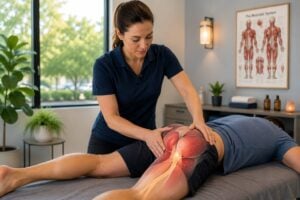
Knee Rehabilitation
Following knee surgery or ligament injuries, surrounding muscles frequently become tight due to altered walking patterns.
Addressing these muscular restrictions may improve overall comfort during daily activities.
Hip Pain
Hip injuries commonly create compensation patterns involving the lower back and pelvis.
Massage helps address these interconnected muscle groups to encourage more balanced movement.
Neck Pain
Even after cervical rehabilitation improves mobility, many people continue experiencing muscle tension caused by work posture, stress, or previous injury.
Massage helps reduce these lingering soft tissue restrictions.
Lower Back Pain
Lower back discomfort often involves more than the spine itself.
Tight hips, hamstrings, gluteal muscles, and abdominal tissues may all contribute to ongoing symptoms.
Treating these related areas supports a more comprehensive recovery.
Recovery Is a Journey, Not a Finish Line
Being discharged from physical therapy doesn’t necessarily mean your body has reached its fullest recovery.
Instead, it often means you’ve developed the strength and movement needed to continue progressing independently.
For many people, massage therapy becomes the next logical step, helping reduce lingering soft tissue restrictions, improve comfort, and support the active lifestyle they’ve worked so hard to regain.
Rather than replacing the progress made during rehabilitation, massage builds upon it by addressing the muscles and connective tissues that influence how you move every day.
What to Expect at Narayan Wellness
At Narayan Wellness, massage therapy is never a one-size-fits-all experience.
Each session begins with understanding your health history, current symptoms, previous injuries, lifestyle, and recovery goals. Whether you’ve recently completed physical therapy, are preparing to return to sports, or simply want to improve everyday movement, your treatment is tailored to your individual needs.
Depending on your presentation, your therapist may incorporate a combination of therapeutic techniques designed to address soft tissue restrictions, improve mobility, reduce muscular tension, and promote relaxation.
Treatment plans evolve as your body changes. As pain decreases and movement improves, techniques and focus areas may be adjusted to support continued progress and long-term wellness.
Building Healthy Habits After Rehabilitation
Massage therapy works best when it’s part of a comprehensive approach to health.
To maximize the benefits of your recovery, consider these habits:
Continue Your Home Exercise Program
The exercises prescribed during physical therapy help maintain strength, flexibility, and joint stability. Staying consistent supports long-term results.
Stay Physically Active
Walking, swimming, cycling, strength training, or other low-impact activities help keep joints mobile and muscles engaged.
Prioritize Sleep
Quality sleep plays an essential role in tissue repair, hormone regulation, and nervous system recovery.
Stay Hydrated
Healthy connective tissues depend on proper hydration. Drinking enough water also supports overall physical performance and recovery.
Manage Stress
Mental stress often contributes to physical muscle tension. Mindfulness practices, breathing exercises, regular movement, and massage therapy can all support a healthier stress response.
Final Thoughts
Healing is rarely a straight line.
Completing physical therapy is an important achievement, but it isn’t always the final step in your recovery journey. Lingering muscle tightness, fascial restrictions, scar tissue, and compensation patterns can continue to affect how you move and feel long after formal rehabilitation ends.
Massage therapy helps address these soft tissue concerns while complementing the strength, flexibility, and movement patterns developed during physical therapy.
For individuals in Pleasanton who want to reduce lingering discomfort, improve mobility, and maintain an active lifestyle, combining rehabilitation with therapeutic massage offers a thoughtful, holistic approach to long-term wellness.
FAQs
Does massage therapy help after physical therapy ends?
Massage therapy can complement physical therapy by addressing lingering muscle tension, fascial restrictions, and soft tissue discomfort that may remain after rehabilitation.
Should I get a massage before or after physical therapy?
Depending on your condition, massage therapy may be beneficial before, during, or after rehabilitation. Your treatment plan should be tailored to your individual needs and coordinated with your healthcare providers when appropriate.
Why am I still sore after completing physical therapy?
Residual soreness may be related to muscle guarding, connective tissue restrictions, scar tissue, or compensatory movement patterns rather than the original injury itself.
Can massage improve mobility after an injury?
Massage therapy may help improve soft tissue mobility, reduce muscular tension, and support healthy movement when combined with an appropriate exercise program.