Breathing is something most of us rarely think about until it becomes difficult. Whether you’re sitting through a long workday, exercising, managing stress, or recovering from an illness, the quality of every breath influences how your body feels and performs.
Many people assume breathing problems always begin in the lungs. While lung health is certainly important, healthy breathing also depends on muscles, joints, connective tissues, posture, and the nervous system.
Even if your lungs are functioning normally, tight muscles around the neck, shoulders, chest, ribs, and diaphragm can make every breath feel smaller than it should.
This is where therapeutic massage can make a meaningful difference.
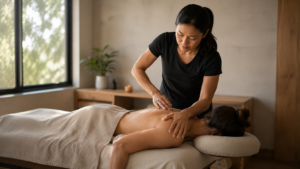
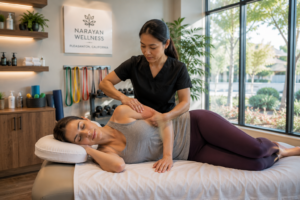
Massage therapy is not a treatment for lung disease, but it can help reduce musculoskeletal restrictions that interfere with efficient breathing. By improving soft tissue mobility and encouraging relaxation, massage may help people breathe more comfortably, move with greater ease, and feel less tension throughout the body.
For many residents seeking massage therapy in Pleasanton, improving breathing isn’t the primary reason they schedule an appointment.
They often come in because of neck stiffness, shoulder pain, poor posture, headaches, or chronic stress. Yet after treatment, many notice another welcome benefit, they simply breathe easier.
Why Breathing Is More Than Just Lung Function
When you inhale, your lungs don’t actively pull in air by themselves. Instead, muscles create the movement that allows the lungs to expand.
The primary breathing muscles include:
- The diaphragm
- Intercostal muscles between the ribs
- Abdominal muscles
- Scalene muscles in the neck
- Sternocleidomastoid muscles
- Pectoral muscles
- Serratus anterior
- Latissimus dorsi
These muscles work together like a coordinated team. If even one area becomes restricted, the entire breathing pattern can change.
Imagine trying to inflate a balloon while squeezing it from the sides. The balloon still expands, but not nearly as well as it could. The same principle applies to the rib cage when muscles become tight.
Modern lifestyles make this increasingly common. Long hours at a computer, frequent smartphone use, driving, emotional stress, and repetitive movements all encourage forward-rounded posture and muscular imbalance. Over time, these habits reduce the natural expansion of the rib cage.
Understanding the Muscles That Control Breathing
The Diaphragm
The diaphragm is the body’s primary breathing muscle. It sits beneath the lungs like a dome.
During inhalation, it contracts and moves downward, creating space for the lungs to expand. During exhalation, it relaxes and returns upward.
However, chronic stress often changes how people breathe. Instead of relying primarily on the diaphragm, they begin breathing from the upper chest.
This “chest breathing” recruits smaller muscles in the neck and shoulders that were designed to assist breathing, not perform it continuously.
As these muscles work overtime, they become tight, fatigued, and painful.
The Intercostal Muscles
Located between each rib, the intercostal muscles help expand and contract the rib cage.
When these muscles lose flexibility because of inactivity, injury, or repetitive posture, the ribs cannot move as freely.
Reduced rib mobility often contributes to:
- A sensation of tightness around the chest
- Limited deep breathing
- Poor rotational movement
- Upper back stiffness
- Discomfort during exercise
Accessory Breathing Muscles
Muscles including the scalenes, sternocleidomastoid, upper trapezius, and pectoralis minor help during heavy breathing.
Unfortunately, many people rely on these muscles even while resting.
Over time this may contribute to:
- Neck pain
- Shoulder tightness
- Tension headaches
- Jaw tension
- Upper back discomfort
- Persistent feelings of stress
How Muscle Tension Restricts Healthy Breathing
Muscles are designed to move.
When they remain shortened for hours every day, they gradually lose elasticity.
Common contributors include:
Desk Work
Sitting with rounded shoulders compresses the chest and limits rib expansion.
Emotional Stress
Stress activates the sympathetic nervous system, encouraging shallow, rapid breathing.
Poor Posture
Forward head posture forces accessory breathing muscles to work harder than necessary.
Previous Injuries
Falls, surgeries, sports injuries, or rib trauma can leave lasting restrictions within connective tissue.
Lack of Movement
Physical inactivity reduces spinal mobility, rib movement, and overall flexibility.
Over time, these factors create a cycle:
Tight muscles → Shallower breathing → Increased muscle tension → Greater fatigue → Reduced movement → Even tighter muscles.
Massage therapy aims to interrupt this cycle by restoring soft tissue mobility and encouraging healthier movement patterns.
Common Signs Your Breathing Mechanics May Be Limited
Many people never realize their breathing has become restricted because the changes happen gradually.
Possible signs include:
- Frequent neck tension
- Tight shoulders
- Difficulty taking a deep breath
- Feeling like you “can’t get enough air” despite normal medical evaluations
- Chest tightness related to muscle tension
- Limited rib movement
- Poor posture
- Increased fatigue during physical activity
- Speaking in shorter sentences because breathing feels shallow
- Feeling winded during activities that used to feel easy
These symptoms can have many different causes. Persistent shortness of breath, chest pain, wheezing, dizziness, or sudden breathing changes should always be evaluated promptly by a qualified healthcare professional.
When medical causes have been addressed, however, musculoskeletal restrictions may still contribute to inefficient breathing mechanics.
How Massage Therapy Improves Breathing Patterns
Massage therapy works by addressing soft tissues that influence movement throughout the chest, back, neck, shoulders, and abdomen.
Rather than focusing solely on one painful area, an experienced massage therapist evaluates how different muscle groups interact during normal breathing.
Treatment may include gentle work on the:
- Pectoral muscles
- Upper back
- Intercostal muscles
- Neck
- Shoulders
- Thoracic spine muscles
- Diaphragm-related fascial restrictions, when appropriate and within the therapist’s scope of practice
As muscular tension decreases, many clients notice that inhalation feels smoother and less restricted.
Improved Rib Cage Mobility
Every breath depends on small but important movements of the ribs.
Healthy ribs elevate, rotate, and expand with each inhalation.
When surrounding muscles become stiff, that movement becomes limited.
Massage helps improve tissue flexibility, allowing the rib cage to move more naturally during daily activities.
The Connection Between Posture, Rib Cage Mobility, and Breath
Posture and breathing are inseparable. Every position you hold throughout the day affects how easily your lungs can expand and how efficiently your breathing muscles work.
Think about how you naturally sit while working on a laptop or scrolling through your phone. Your head moves forward, your shoulders round inward, and your upper back begins to curve. In this position, the muscles across the front of the chest gradually shorten while the muscles in the upper back become overstretched and fatigued.
Over weeks, months, or even years, these postural habits can limit the movement of the rib cage and diaphragm. Even if your lungs are healthy, your body may not allow them to expand as fully as they could.
Massage therapy helps address these muscular imbalances by reducing excessive tension and improving tissue flexibility. Combined with posture awareness and movement exercises, massage can help restore a more natural breathing pattern.
The Thoracic Spine Matters More Than You Think
The thoracic spine, the middle section of your back, plays an important role in breathing.
Each rib connects to the thoracic vertebrae, allowing the rib cage to expand with every inhale. When this region becomes stiff due to prolonged sitting, repetitive movement, or inactivity, rib motion can become restricted.
Improving soft tissue mobility around the thoracic spine often helps people feel less rigid during everyday movements such as reaching overhead, twisting, exercising, or taking a deep breath.
Stress Changes the Way You Breathe
Breathing is one of the few body functions controlled by both the automatic nervous system and conscious awareness.
During periods of chronic stress, your body naturally shifts toward a “fight-or-flight” response. This often leads to:
- Faster breathing
- Shallower breaths
- Increased neck and shoulder tension
- Tightness through the chest
- Greater muscle fatigue
Massage therapy promotes relaxation by encouraging the body to shift toward a more restful state. Many clients notice that as their muscles relax, their breathing naturally becomes slower and deeper without consciously trying to change it.
While massage is not a replacement for stress management techniques, it can be an effective part of a comprehensive wellness routine that includes exercise, quality sleep, healthy nutrition, and mindfulness practices.
Conclusion
Healthy breathing depends on far more than healthy lungs. Every breath is supported by an intricate network of muscles, connective tissues, joints, and nerves working together in remarkable coordination.
When these structures become tight or restricted, breathing can become less efficient, contributing to tension, fatigue, reduced mobility, and discomfort. Fortunately, addressing these musculoskeletal factors may help restore more natural movement and improve overall well-being.
Therapeutic massage offers a holistic approach by focusing on the muscles that influence breathing, posture, and rib cage mobility. While it is not a treatment for respiratory disease, it can be a valuable complement to an overall wellness plan for individuals experiencing muscular tightness, postural strain, or stress-related breathing patterns.
Whether you’re an office worker managing long hours at a desk, an athlete looking to optimize recovery, or simply someone seeking to move and breathe with greater ease, improving the health of your muscles may be one of the most overlooked steps toward feeling your best.
At Narayan Wellness in Pleasanton, therapeutic massage is tailored to each individual’s unique needs, helping clients improve mobility, reduce muscular tension, and support healthier movement patterns that contribute to overall wellness.
FAQs
Can massage therapy increase lung capacity?
Massage does not directly increase lung capacity. However, by improving soft tissue mobility and reducing muscular restrictions around the chest and rib cage, it may help people breathe more comfortably and efficiently.
Can massage help with shortness of breath?
Shortness of breath can have many causes, including serious medical conditions. Anyone experiencing persistent or sudden breathing difficulties should seek medical evaluation promptly. When symptoms are related to muscular tension or postural restrictions, massage may be a helpful complementary therapy after appropriate medical assessment.
Is diaphragm massage safe?
Techniques involving the diaphragm should only be performed by appropriately trained professionals and may not be suitable for everyone. Your massage therapist will determine whether these techniques are appropriate based on your medical history and comfort level.
How many sessions are usually recommended?
The ideal frequency depends on your goals, lifestyle, activity level, and the severity of muscular tension. Some individuals benefit from occasional maintenance sessions, while others may see better results with a more consistent treatment plan.