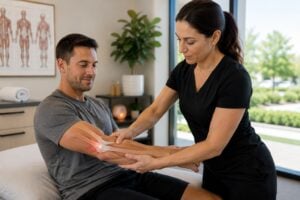
If you’ve been dealing with pain on the outside of your elbow whenever you lift a coffee mug, shake someone’s hand, type on a keyboard, or pick up groceries, you may be experiencing tennis elbow, medically known as lateral epicondylitis.
Despite its name, tennis elbow affects far more than athletes. In fact, many people who develop this condition have never picked up a tennis racket. Office professionals, mechanics, electricians, hairstylists, gardeners, musicians, healthcare workers, pickleball players, and parents lifting young children are all at risk.
The good news is that surgery is rarely the first or best option. Conservative treatment, including massage therapy, exercise, activity modification, and proper recovery, helps many people reduce pain and regain function.
This guide explains how massage therapy fits into an evidence-informed recovery plan, what benefits you can realistically expect, and how to support long-term healing.
What Is Tennis Elbow?
Tennis elbow is an overuse injury affecting the tendons that attach the forearm muscles to the outside of the elbow. These muscles help you:
- Grip objects
- Lift items
- Twist a doorknob
- Use tools
- Type
- Shake hands
- Pour from a pitcher
- Swing a racket or golf club
Repeated stress creates tiny microscopic changes within the tendon over time. Rather than being a classic inflammatory injury, tennis elbow often reflects gradual tendon degeneration caused by repetitive overload.
Think of the tendon like a rope. A healthy rope handles repeated pulling with ease. But thousands of small pulls without enough recovery gradually weaken the fibers until everyday activities become painful.
What Causes Tennis Elbow?
Most cases develop because of repetitive wrist and forearm movements rather than one traumatic event.
Common contributors include:
- Computer mouse use
- Repetitive typing
- Weight training
- Tennis
- Pickleball
- Golf
- Carpentry
- Painting
- Plumbing
- Gardening
- Cooking
- Hair styling
- Assembly-line work
- Frequent lifting
Several additional factors may increase risk:
- Poor grip mechanics
- Weak shoulder muscles
- Reduced wrist mobility
- Poor workplace ergonomics
- Sudden increases in activity
- Inadequate recovery between workouts
Many people notice symptoms gradually instead of waking up with severe pain overnight.
Signs and Symptoms
Typical symptoms include:
- Pain on the outside of the elbow
- Tenderness over the bony prominence
- Pain when gripping objects
- Weak grip strength
- Discomfort while lifting
- Pain opening jars
- Difficulty carrying grocery bags
- Pain during computer work
- Aching after sports
- Forearm tightness
The discomfort may begin as a mild annoyance but gradually interfere with work, hobbies, exercise, and daily tasks.
Why It’s Not Just a “Tennis” Injury
Studies suggest only a small percentage of people with tennis elbow actually developed it while playing tennis.
Today’s most common causes include repetitive work and modern lifestyle habits.
Examples include:
- Long hours using a mouse
- Heavy smartphone use
- Repetitive lifting
- DIY home improvement
- Childcare
- Pickleball
- CrossFit
- Warehouse work
- Healthcare professions
Because the injury develops from repeated loading, treatment should address not only the painful tendon but also the surrounding muscles and movement patterns.
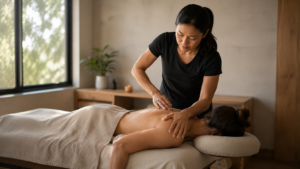
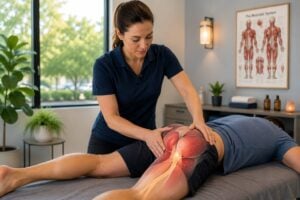
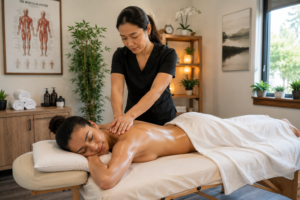
How Massage Therapy Can Help Tennis Elbow
Massage therapy does not “repair” damaged tendons overnight, nor should it be viewed as a stand-alone cure. However, it can play an important role in reducing symptoms and improving function when combined with appropriate exercise and activity modification.
Potential benefits include:
Reducing Muscle Tension
People with tennis elbow often develop excessive tightness throughout the forearm.
These muscles continue pulling on the irritated tendon throughout the day.
Massage helps decrease muscle tension, allowing the arm to move more comfortably.
Improving Blood Flow
Healthy circulation supports tissue nutrition and recovery.
Although tendons naturally receive less blood supply than muscles, improving circulation to surrounding tissues may contribute to a healthier healing environment.
Improving Mobility
Pain often causes people to avoid moving the arm.
Reduced movement creates stiffness in:
- Wrist
- Forearm
- Elbow
- Shoulder
Massage helps restore soft tissue mobility so everyday movement feels easier.
Decreasing Protective Guarding
Pain causes muscles to tighten defensively.
This protective response may actually increase discomfort over time.
Gentle manual therapy encourages the nervous system to relax excessive muscle guarding.
Supporting Exercise
Research consistently shows that strengthening exercises are among the most effective conservative treatments for tennis elbow.
Massage prepares tissues for exercise by reducing stiffness and improving comfort, making rehabilitation exercises easier to perform correctly.
Massage Techniques Commonly Used
A qualified massage therapist may use different approaches depending on your symptoms.
Myofascial Release
This technique addresses restrictions within connective tissue surrounding muscles.
Improved tissue mobility can decrease tension through the forearm.
Trigger Point Therapy
Trigger points are sensitive knots that may refer pain into the elbow or wrist.
Carefully releasing these areas may reduce muscle tightness and improve movement.
Deep Tissue Massage
Deep tissue massage targets deeper muscle layers where chronic tension often develops.
Pressure should always remain within a comfortable therapeutic range rather than causing excessive pain.
Cross-Fiber Friction
Some clinicians incorporate transverse friction techniques near the affected tendon.
The goal is to stimulate local tissue remodeling, though this approach should be individualized based on symptom severity.
Sports Massage
Athletes often benefit from massage that focuses on improving recovery, flexibility, and muscle balance while supporting return to activity.
What the Research Says
Current research suggests that conservative care remains the preferred first-line treatment for most people with tennis elbow.
Evidence supports several components working together:
- Progressive strengthening exercises
- Activity modification
- Manual therapy
- Patient education
- Gradual return to activity
Massage therapy may help reduce pain, improve soft tissue mobility, and support participation in rehabilitation exercises. While massage alone has limited high-quality evidence as a cure, it can be a valuable complementary treatment within a comprehensive care plan.
Recovery is rarely about one technique. Instead, successful outcomes often result from combining multiple evidence-informed strategies consistently over time.
Massage Therapy vs. Other Treatment Options
Rest Alone
Complete rest often provides temporary relief but does not improve the tendon’s ability to tolerate future activity.
Gradual loading is generally more effective than prolonged inactivity.
Ice
Ice may temporarily reduce discomfort after aggravating activities.
However, it should not replace active rehabilitation.
Medication
Over-the-counter pain relievers may reduce symptoms for some individuals but do not address the underlying mechanical contributors.
Always follow medical advice regarding medications.
Cortisone Injections
Steroid injections may offer short-term pain relief for selected patients.
However, research suggests long-term outcomes are not consistently better than conservative care alone, and repeated injections may not be appropriate for everyone.
Physical Therapy
Physical therapy often includes:
- Strengthening
- Stretching
- Movement retraining
- Education
- Activity modification
Massage therapy frequently complements these interventions by improving comfort and soft tissue mobility.
Surgery
Most people improve without surgery.
Surgical intervention is typically reserved for persistent cases that do not respond to comprehensive conservative management over many months.
Self-Care Tips to Speed Recovery
Massage works best when paired with healthy daily habits.
Modify Activities
Reduce or temporarily adjust movements that repeatedly trigger symptoms.
This doesn’t necessarily mean stopping all activity, it often means performing tasks differently.
Strengthen Gradually
Progressive forearm strengthening improves tendon capacity over time.
A healthcare professional can recommend exercises appropriate for your stage of recovery.
Improve Ergonomics
Consider:
- Keyboard position
- Mouse placement
- Chair height
- Wrist support
- Tool handles
Small adjustments performed consistently may reduce repetitive stress.
Stretch Regularly
Gentle stretches for the wrist extensors and forearm muscles can help maintain flexibility.
Avoid aggressive stretching into severe pain.
Warm Up Before Activity
Whether you’re playing pickleball or working in the garden, warming up prepares muscles and tendons for increased demand.
Pace Yourself
Sudden spikes in activity often trigger flare-ups.
Increase exercise intensity or repetitive tasks gradually rather than all at once.
When to Seek Professional Care
You should consider a professional evaluation if:
- Pain lasts more than several weeks
- Symptoms interfere with work
- Grip strength continues decreasing
- Pain wakes you at night
- Home care is not helping
- Symptoms continue returning
Because elbow pain may sometimes originate from the neck, shoulder, or nerves, an accurate assessment is important before beginning treatment.
Preventing Tennis Elbow from Returning
Recovery does not end when the pain disappears.
Preventing recurrence requires addressing the factors that contributed to the condition in the first place.
Helpful strategies include:
- Maintain forearm strength.
- Strengthen the shoulder and upper back to improve overall arm mechanics.
- Take frequent movement breaks during computer work.
- Vary repetitive tasks whenever possible.
- Use proper technique during sports and exercise.
- Replace worn equipment, such as racquet grips or hand tools, that forces excessive gripping.
- Schedule recovery days after heavy physical activity.
- Stay consistent with mobility exercises instead of waiting until discomfort returns.
Think of tendon health like maintaining a vehicle. Regular maintenance is far easier and less expensive than waiting for something to fail. Small habits performed consistently can dramatically reduce the likelihood of future flare-ups.
Why Choose Massage Therapy in Pleasanton?
If you live or work in Pleasanton, addressing tennis elbow early can help you stay active and productive before symptoms become more limiting.
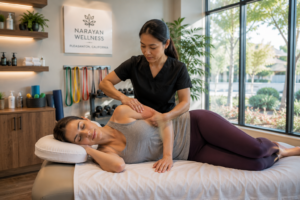
At Narayan Wellness Inc., massage therapy is tailored to each individual’s goals, activity level, and symptoms. Rather than focusing only on the painful elbow, treatment considers the entire kinetic chain, including the wrist, forearm, upper arm, shoulder, neck, and posture, to identify contributing factors that may be increasing stress on the affected tendon.
Every person’s recovery journey is different. An office worker who spends eight hours a day using a computer may require a different approach than a recreational pickleball player or a contractor using hand tools. Personalized care helps ensure treatment supports your lifestyle and recovery goals.
For the best results, massage therapy is often combined with education, home exercises, ergonomic modifications, and appropriate activity progression. This whole-body approach not only aims to relieve current discomfort but also helps improve movement quality and reduce the risk of future recurrences.
Conclusion
Tennis elbow can be frustrating, but it doesn’t have to become a long-term obstacle. Early intervention, thoughtful activity modification, progressive strengthening, and evidence-informed manual therapy can help many people regain comfort and confidence without surgery.
Massage therapy is not a miracle cure, but it can be a valuable part of a comprehensive recovery strategy. By reducing muscle tension, improving mobility, supporting rehabilitation exercises, and addressing movement patterns that contribute to overload, massage helps create the conditions for better function and lasting relief.
If you’re experiencing persistent elbow pain that affects your work, sports, or everyday life, seeking professional guidance sooner rather than later may help shorten recovery and prevent the problem from becoming chronic.
FAQs
Can massage therapy cure tennis elbow?
Massage therapy is not considered a standalone cure. It can reduce muscle tension, improve mobility, and complement strengthening exercises and other conservative treatments that support recovery.
How many massage sessions are usually needed?
The number varies depending on symptom severity, activity level, and overall treatment plan. Many people notice gradual improvement over several sessions when massage is combined with exercise and activity modification.
Is deep tissue massage too painful for tennis elbow?
Therapeutic massage should be effective without being excessively painful. Your massage therapist should adjust pressure based on your comfort and the stage of healing.
Should I stop exercising completely?
Not necessarily. Most people benefit from modifying activities rather than eliminating all movement. A healthcare professional can recommend safe exercises that maintain fitness while protecting the injured tendon.
Can office workers develop tennis elbow?
Yes. Repetitive computer use, prolonged mouse work, and poor ergonomics are common contributors, even in people who have never played tennis.