Most people think poor posture simply means “slouching.” But in reality, posture is much more complex.
Posture is the way your body holds itself against gravity, whether you’re sitting, standing, or moving. When your body is aligned correctly, muscles, joints, and ligaments work efficiently with minimal strain.
But when posture breaks down, your body shifts into compensation mode.
Instead of balance, you get:
- Overworked muscles
- Tight connective tissue
- Misaligned joints
And over time, this creates the perfect environment for chronic pain.
The Hidden Chain Reaction: How Posture Leads to Chronic Pain
Poor posture doesn’t cause pain overnight. It builds gradually, like a slow leak you don’t notice until the damage is done.
Here’s what happens beneath the surface:
Step 1: Misalignment Begins
Your head shifts forward. Your shoulders round. Your spine loses its natural curve.
Step 2: Muscle Imbalances Develop
Some muscles become tight and overactive (like your chest and upper traps), while others weaken (like your upper back and core).
Step 3: Tension Accumulates
Your body starts holding constant tension just to keep you upright.
Step 4: Pain Signals Activate
Eventually, your nervous system says:
“Something’s wrong.”
That’s when symptoms appear:
- Neck stiffness
- Shoulder pain
- Lower back discomfort
- Frequent headaches
This is why posture-related pain feels persistent, it’s not just a symptom. It’s a pattern.
3. Common Posture Problems in Modern Life
Modern lifestyles are practically designed to damage posture.
Forward Head Posture (“Tech Neck”)
Your head moves inches forward from its natural position, adding significant strain to your neck.
Rounded Shoulders
Often caused by prolonged sitting and typing.
Anterior Pelvic Tilt
Common in people who sit for long hours, leading to lower back pain.
Slouched Sitting
Compresses your spine and restricts breathing.
These patterns are especially common among:
- Office workers
- Students
- Drivers
- Phone users
In other words, almost everyone.
Why Your Body Can’t “Just Fix Itself”
A common misconception is that posture will improve naturally if you “sit up straight.”
But here’s the truth:
Your body adapts to what you do most.
If you spend 6–10 hours a day in poor posture, your body begins to:
- Reinforce those positions
- Shorten certain muscles
- Weaken others
This creates a new normal for your body.
So even if you try to correct your posture, it feels uncomfortable or even painful.
That’s not weakness. That’s adaptation.
The Science Behind Muscle Imbalances and Pain
When your posture is off, your muscles stop working as a team.
Instead, they fall into two categories:
Overactive Muscles (Tight & Painful)
- Neck extensors
- Upper trapezius
- Chest muscles
Underactive Muscles (Weak & Inactive)
- Deep neck flexors
- Rhomboids
- Core stabilizers
This imbalance leads to:
- Reduced mobility
- Increased joint stress
- Chronic inflammation
Over time, your body becomes locked in dysfunction.
How Massage Therapy Corrects Posture at the Root
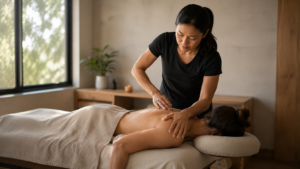
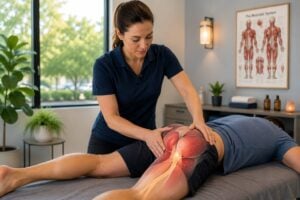
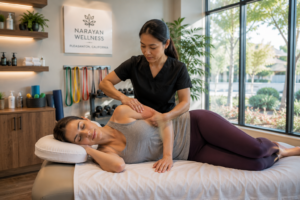
This is where massage therapy becomes powerful and not just for relief, but for correction.
Massage doesn’t just “relax muscles.” It resets dysfunctional patterns.
Here’s how:
1. Releases Tight Muscles
Massage breaks up tension in overactive areas like the neck, shoulders, and chest.
2. Improves Tissue Elasticity
It restores flexibility to fascia (connective tissue), allowing your body to move freely again.
3. Enhances Body Awareness
After a session, clients often notice:
- Improved alignment
- Better movement patterns
- Reduced strain
4. Supports Muscle Rebalancing
Once tight muscles relax, weak muscles can re-engage properly.
This is the foundation of true posture correction.
Key Massage Techniques That Improve Posture
Different techniques target posture in different ways:
Deep Tissue Massage
Breaks up chronic tension and adhesions.
Myofascial Release
Targets fascia restrictions that limit movement.
Trigger Point Therapy
Releases specific pain points contributing to dysfunction.
Neuromuscular Therapy
Re-educates muscles for proper function and alignment.
Each approach works together to restore balance, not just temporarily, but structurally.
Real-Life Scenarios: From Desk Pain to Lasting Relief
The Desk Worker
After years of sitting, they develop neck stiffness and shoulder pain.
Massage releases tension and restores upper back function.
The Phone User
Constant downward gaze leads to headaches and tight neck muscles.
Massage reduces strain and improves head positioning.
The Commuter
Long hours driving cause lower back pain.
Massage improves spinal mobility and reduces compression.
These are not rare cases, they’re everyday realities.
The Nervous System Connection: Why Relaxation Matters
Posture isn’t just physical, it’s neurological.
When your body is under constant stress:
- Muscles tighten
- Breathing becomes shallow
- Pain sensitivity increases
Massage activates the parasympathetic nervous system, your body’s “rest and repair” mode.
This allows:
- Muscles to relax deeply
- Pain signals to decrease
- Healing to begin
Without this shift, posture correction is incomplete.
How Long Does It Take to Fix Poor Posture?
There’s no one-size-fits-all answer.
It depends on:
- How long you’ve had poor posture
- Your daily habits
- Your consistency with treatment
However, many people notice:
- Immediate relief after 1 session
- Noticeable improvement within a few weeks
- Long-term changes with consistent care
Posture is not a quick fix, it’s a process.
Simple Daily Habits to Support Better Posture
Massage works best when combined with daily awareness.
Here are simple ways to support your progress:
- Adjust your workstation ergonomics
- Take movement breaks every 30–60 minutes
- Keep screens at eye level
- Practice mindful sitting and standing
- Stretch tight muscles regularly
Small changes create lasting results.
When to Seek Professional Help
If you’re experiencing:
- Persistent pain
- Limited mobility
- Frequent tension headaches
It’s time to go beyond self-correction.
Professional massage therapy can:
- Identify underlying issues
- Provide targeted treatment
- Accelerate recovery
The Long-Term Consequences of Ignoring Poor Posture
Poor posture doesn’t stay “mild” forever. What begins as occasional stiffness can gradually evolve into deeper, more complex issues that affect your quality of life.
When postural imbalances go unaddressed, your body compensates in ways that create long-term strain. Over time, this can lead to:
- Chronic joint degeneration
- Reduced spinal mobility
- Persistent nerve compression
- Increased injury risk
For example, forward head posture places continuous stress on the cervical spine. This can eventually contribute to disc issues, nerve irritation, and even radiating pain into the arms.
Similarly, long-term slouching can compress internal organs, affecting digestion and breathing capacity.
What makes this especially concerning is that many people adapt to discomfort. They normalize pain instead of addressing its root cause.
Massage therapy plays a crucial role here by interrupting this cycle early, restoring movement, and preventing minor dysfunction from becoming a chronic condition.
Posture and Breathing: The Overlooked Connection
One of the most underestimated effects of poor posture is how it impacts your breathing.
When you slouch or round your shoulders:
- Your chest collapses
- Your diaphragm becomes restricted
- Your lungs can’t fully expand
This leads to shallow breathing, which reduces oxygen intake and keeps your body in a low-grade stress state.
Over time, this can contribute to:
- Fatigue
- Anxiety
- Reduced focus
- Muscle tension
Massage therapy helps by opening the chest, releasing tight intercostal muscles, and restoring natural rib cage movement.
As posture improves, breathing becomes deeper and more efficient, supporting both physical and mental well-being.
How Poor Posture Affects Energy Levels and Fatigue
If you constantly feel tired, even after rest, your posture could be a hidden factor.
When your body is misaligned, muscles have to work harder just to keep you upright. This constant effort drains energy throughout the day.
Think of it like driving a car with misaligned wheels. It still moves, but it requires more fuel and creates more wear and tear.
Poor posture can lead to:
- Muscle fatigue
- Reduced circulation
- Mental fog
- Decreased productivity
Massage therapy helps restore efficiency in your body’s movement patterns. When muscles are no longer overworking, your body conserves energy and you feel more alert and capable.
The Role of Core Strength in Postural Alignment
Your core is more than just your abs, it’s the foundation of your posture.
A strong, balanced core supports your spine and keeps your body aligned during movement and rest. But when core muscles are weak or underactive, other muscles step in to compensate.
This often leads to:
- Lower back pain
- Hip instability
- Poor balance
Massage therapy complements core strengthening by releasing tight surrounding muscles (like hip flexors and lower back muscles), allowing your core to function properly.
Without addressing these tight areas, strengthening exercises alone may not be effective.
Final Thoughts: Rebuilding Your Body from the Ground Up
Poor posture is not just a habit, it’s a pattern that affects your entire body.
But the good news is this:
Your body is adaptable.
With the right approach, you can:
- Reduce pain
- Restore balance
- Improve how you move and feel every day
Massage therapy isn’t just about relaxation, it’s about real, lasting change.
FAQs
Can massage therapy fix poor posture permanently?
Massage therapy helps correct the underlying muscle imbalances that cause poor posture, but lasting results require consistent care and lifestyle adjustments.
How often should I get a massage for posture correction?
Most people benefit from weekly or biweekly sessions initially, followed by maintenance treatments.
What type of massage is best for posture correction?
Deep tissue, myofascial release, and neuromuscular therapy are highly effective for correcting posture-related issues.
Does massage help with forward head posture?
Yes, massage reduces tension in the neck and shoulders, helping restore proper alignment.