Carpal tunnel syndrome doesn’t start overnight. It builds slowly, often disguised as mild wrist fatigue after a long day at the computer. Then one day, you wake up with numb fingers. Or your grip feels weaker. Or a sharp, electric-like sensation runs from your wrist into your palm.
Carpal tunnel syndrome occurs when the median nerve becomes compressed as it passes through the carpal tunnel which is a narrow passageway in the wrist surrounded by bones and ligaments. When pressure increases inside that tunnel, the nerve becomes irritated, leading to pain, tingling, weakness, and inflammation.
In a community like Pleasanton, where many professionals work in technology, finance, healthcare, and office-based roles, repetitive strain injuries are common. Hours of typing, trackpad use, texting, driving, and weight training create micro-stress in the forearm muscles. Over time, that stress compounds.
The result? Wrist pain that doesn’t go away.
Why Wrist Pain Is So Common in Pleasanton Professionals
Repetitive hand movements are the obvious culprit. But the real story goes deeper.
Consider the average desk worker:
- 6–10 hours of computer use daily
- Limited wrist mobility breaks
- Elevated stress levels
- Forward head posture
- Rounded shoulders
The forearm muscles responsible for gripping and finger movement remain in a semi-contracted state throughout the workday. Imagine clenching your fist lightly for eight hours straight. Eventually, tension builds. That tension pulls on tendons that pass directly through the carpal tunnel.
The space narrows. Pressure increases. The median nerve protests.
Wrist pain relief in Pleasanton often requires more than a brace or anti-inflammatory medication. It requires addressing the muscular and fascial tension contributing to nerve compression.
The Anatomy Behind Carpal Tunnel Syndrome
To understand how massage therapy helps, you need to understand the mechanics.
The carpal tunnel contains:
- The median nerve
- Nine flexor tendons
- Connective tissue
- The transverse carpal ligament forming the “roof”
When forearm flexor muscles tighten excessively, they create traction through their tendons. Those tendons swell from overuse. Swelling increases pressure inside the confined tunnel.
Nerves don’t tolerate pressure well. Even slight compression can produce:
- Tingling in the thumb, index, and middle fingers
- Burning sensations
- Weak grip strength
- Nighttime numbness
Interestingly, many people treat only the wrist. But the tension often originates higher, through the forearm, elbow, shoulder, or even neck.
Early Warning Signs You Shouldn’t Ignore
Catching symptoms early significantly improves recovery outcomes.
Common early signs include:
- Numbness that wakes you at night
- Tingling when holding a phone
- Weakness opening jars
- Wrist stiffness in the morning
- Pain radiating into the forearm
These symptoms may seem minor. But they indicate that nerve irritation has already begun.
Addressing wrist pain relief in Pleasanton early, before structural damage develops, can prevent the need for invasive intervention later.
Why Conventional Treatments Don’t Always Solve the Root Problem
Standard treatment often includes:
- Wrist splints
- NSAIDs
- Corticosteroid injections
- Surgery (in advanced cases)
While splints can reduce nighttime bending and injections may temporarily decrease inflammation, they do not address muscular tightness or fascial restrictions upstream.
Imagine stepping on a garden hose. You could try increasing water pressure, but unless you remove your foot, flow won’t normalize.
Massage therapy removes the “foot on the hose.”
It reduces tension in the flexor muscles, improves circulation, decreases swelling, and restores glide between tissues.
How Massage Therapy Helps Relieve Carpal Tunnel Symptoms
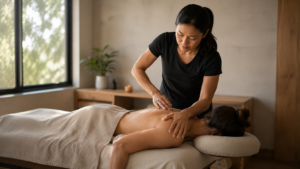
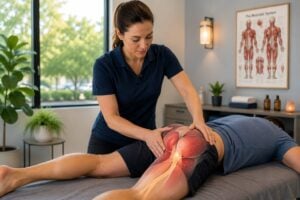
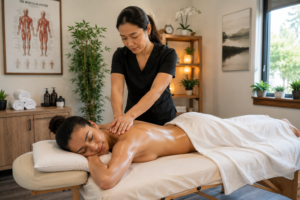
Massage therapy for carpal tunnel syndrome works through several mechanisms:
1. Reduces Muscular Tension
Targeted pressure along the forearm flexors decreases hypertonicity. When muscles relax, tendon pull decreases. This reduces pressure inside the carpal tunnel.
2. Improves Circulation
Increased blood flow helps flush metabolic waste that contributes to inflammation and tissue irritation.
3. Decreases Fascial Restrictions
Fascia can become sticky and dense with repetitive use. Myofascial techniques restore elasticity, improving nerve mobility.
4. Enhances Nerve Glide
When tissues are freed from restriction, the median nerve can move more freely within its sheath, reducing irritation.
5. Modulates the Nervous System
Chronic pain sensitizes the nervous system. Therapeutic touch helps calm this response, reducing pain perception.
Wrist pain relief in Pleasanton through massage is not about temporary relaxation, it’s about mechanical correction.
Targeted Techniques That Restore Strength and Mobility
Effective treatment goes beyond general relaxation massage. It includes precision-based techniques such as:
Deep Forearm Work
Slow, sustained pressure along the flexor digitorum superficialis and profundus reduces muscle tightness at its source.
Cross-Fiber Friction
Applied carefully across tendon fibers, this technique promotes tissue remodeling and decreases adhesions.
Myofascial Release
Gentle sustained pressure helps restore mobility in connective tissue layers that may be compressing the nerve.
Trigger Point Therapy
Trigger points in the pronator teres or wrist flexors can refer pain into the hand. Releasing them can dramatically reduce symptoms.
Joint Mobilization (When Appropriate)
Improving wrist and elbow mobility reduces compensatory strain.
The result is not just reduced pain but improved grip strength and endurance.
The Posture–Forearm–Neck Connection Most People Miss
Here’s something many people don’t realize:
Neck tension can mimic or worsen carpal tunnel symptoms.
The nerves that eventually form the median nerve originate in the cervical spine. If there’s compression at the neck or thoracic outlet, symptoms can amplify.
Forward head posture increases strain along the nerve pathway. Tight pectoral muscles and rounded shoulders contribute to nerve entrapment upstream.
Effective wrist pain relief in Pleasanton must assess the entire kinetic chain, not just the wrist.
When shoulder, chest, and neck tension are addressed alongside forearm treatment, results often improve significantly.
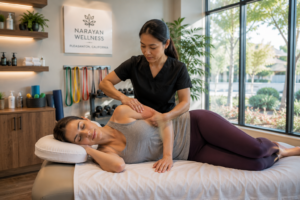
What to Expect During Treatment
A structured approach typically includes:
- Assessment of posture and movement
- Palpation of forearm tension patterns
- Evaluation of nerve sensitivity
- Targeted therapeutic massage techniques
- Post-session mobility guidance
Sessions are often progressive. Early treatments may focus on reducing inflammation and acute sensitivity. Later sessions work on restoring strength and preventing recurrence.
Improvement timelines vary, but many individuals notice reduced tingling and improved comfort within a few sessions when the root cause is muscular.
At-Home Strategies to Support Recovery
Massage therapy works best when supported by smart habits.
Take Micro-Breaks
Every 30–45 minutes, gently extend your wrists and fingers. Even 60 seconds helps reset tension.
Improve Ergonomics
- Keep wrists neutral
- Adjust keyboard height
- Use external keyboards instead of laptop trackpads
- Keep elbows at roughly 90 degrees
Stretch the Forearm Flexors
Extend one arm forward, palm up. Gently pull fingers downward to stretch the underside of the forearm. Hold 20–30 seconds.
Strengthen the Opposing Muscles
Balanced strength reduces overload. Light resistance exercises for wrist extensors can help stabilize the joint.
These strategies complement massage therapy and prevent symptom recurrence.
When to Seek Professional Help
If you experience:
- Persistent numbness
- Muscle atrophy at the base of the thumb
- Loss of grip strength
- Symptoms lasting more than several weeks
It’s important to seek professional evaluation. Early intervention increases the likelihood of avoiding surgical options.
A comprehensive treatment plan may involve collaboration with primary care providers or physical therapy when necessary.
Long-Term Prevention for Desk Workers and Active Adults
Prevention isn’t about avoiding computer use, it’s about building resilience.
Build Mobility Into Your Routine
Five minutes of daily wrist and shoulder mobility work can prevent years of discomfort.
Manage Stress
High stress increases muscular tension subconsciously. Incorporating relaxation practices alongside therapeutic massage enhances outcomes.
Schedule Maintenance Sessions
For individuals with high-demand occupations, periodic massage therapy helps prevent small issues from escalating.
Cross-Train
If your work is repetitive, balance it with movement patterns that use different muscle groups.
Wrist pain relief in Pleasanton is sustainable when prevention becomes part of lifestyle design.
Why Localized, Personalized Care Matters
Every case of carpal tunnel syndrome is slightly different.
Some individuals primarily have tendon inflammation. Others have significant fascial restriction. Some have contributing neck tension. Others have ergonomic overload.
A personalized assessment ensures that treatment addresses the correct contributing factors rather than applying a one-size-fits-all protocol.
In a results-driven wellness environment, treatment focuses on restoring mobility, reducing nerve irritation, and rebuilding strength, not just masking discomfort.
Final Thoughts
Carpal tunnel syndrome is not simply a wrist problem. It’s often the visible symptom of cumulative strain across the forearm, shoulder, and posture.
Addressing muscular tension early can dramatically reduce nerve compression. With targeted massage therapy, improved ergonomics, and smart movement strategies, many individuals experience meaningful relief, without medication or invasive procedures.
For professionals, athletes, and active adults in Pleasanton, wrist pain does not have to become a chronic limitation. With the right approach, strength and mobility can be restored and maintained.
FAQs
Can massage therapy help carpal tunnel syndrome naturally?
Yes, targeted massage therapy can reduce muscular tension, improve circulation, and decrease nerve compression contributing to carpal tunnel symptoms.
How many massage sessions are needed for wrist pain relief in Pleasanton?
The number varies depending on severity, but many individuals notice improvement within several sessions when treatment targets underlying muscular tension.
Is massage safe for numbness and tingling in the hands?
When performed by a trained therapist who understands nerve pathways and pressure modulation, massage can safely support symptom reduction.
What causes carpal tunnel syndrome besides typing?
Repetitive gripping, weight training, driving, phone use, poor posture, and chronic stress can all contribute to increased pressure in the carpal tunnel.
Can massage prevent carpal tunnel surgery?
Early intervention with therapeutic massage may reduce symptom progression and decrease the likelihood of requiring surgical treatment in some cases.