Tight hips are one of the most common yet overlooked causes of discomfort in the modern body. Whether you’re sitting at a desk all day, pushing your limits in the gym, or simply navigating daily life, your hips are constantly working behind the scenes to support nearly every movement you make.
The hip joint is a central hub of mobility. It connects your upper and lower body, stabilizes your posture, and enables everything from walking and bending to running and lifting. When this area becomes tight or restricted, it doesn’t just stay localized, it creates a ripple effect throughout your entire body.
Think of your hips like the hinge of a door. If the hinge is stiff, the entire door struggles to open smoothly. Similarly, tight hips disrupt natural movement patterns, forcing other muscles and joints to compensate.
Common Causes of Tight Hips and Lower Body Pain
Understanding the root cause of tight hips is the first step toward lasting relief. For most people, it’s not just one factor, it’s a combination of lifestyle habits and physical stressors.
Sedentary Lifestyle
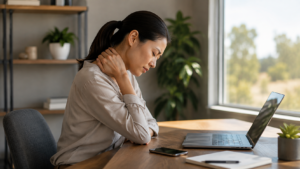
Prolonged sitting is one of the biggest culprits. When you sit for hours, your hip flexors remain in a shortened position, gradually adapting to that state. Over time, they lose flexibility and become chronically tight.
Overuse and Repetitive Movement
Athletes, runners, and active individuals often develop tight hips due to repetitive strain. Without proper recovery, muscles like the hip flexors, glutes, and piriformis can become overworked and restricted.
Muscle Imbalances
Weak glutes and core muscles often shift the workload to the hip flexors and surrounding tissues. This imbalance creates tension and discomfort, especially in the lower back and pelvis.
Stress and Tension Storage
The hips are also known to store emotional stress. Chronic tension can manifest physically, leading to stiffness and reduced mobility.
Signs Your Hips Are Affecting Your Whole Body
Tight hips rarely stay isolated. They often show up as seemingly unrelated issues in other parts of the body.
- Persistent lower back pain
- Knee discomfort or instability
- Reduced range of motion
- Poor posture
- Difficulty standing up after sitting
- Pain during walking, running, or workouts
If you’ve been treating these symptoms without lasting relief, your hips may be the missing piece of the puzzle.
Why Stretching Alone Isn’t Enough
Stretching is often the go-to solution for tight hips, but for many people, it only provides temporary relief.
Why?
Because tightness isn’t just about shortened muscles. It often involves:
- Adhesions in connective tissue
- Trigger points (knots)
- Restricted fascia
- Poor circulation
Stretching doesn’t effectively address these deeper issues. It’s like trying to smooth out a tangled rope by pulling on both ends without actually untangling the knots.
This is where massage therapy becomes essential.
How Massage Therapy Relieves Tight Hips
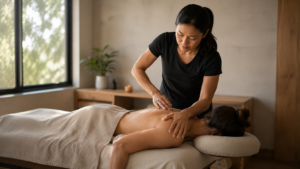
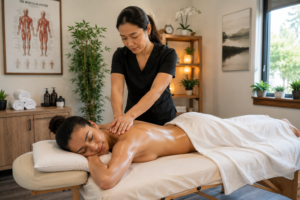
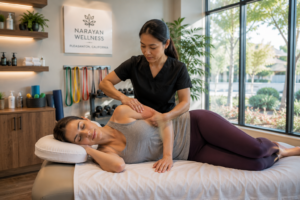
Massage therapy works at a deeper level than stretching alone. It targets the root causes of tightness, not just the symptoms.
Breaks Down Adhesions
Over time, fascia (connective tissue) can become stiff and sticky. Massage helps release these restrictions, restoring natural movement.
Releases Trigger Points
Knots in muscles like the glutes and hip flexors can refer pain to other areas. Targeted pressure helps deactivate these points.
Improves Blood Flow
Increased circulation brings oxygen and nutrients to the muscles, accelerating healing and reducing inflammation.
Resets Muscle Tone
Massage helps the nervous system shift from a state of tension to relaxation, allowing muscles to release naturally.
Key Massage Techniques That Target Hip Pain
Different massage modalities work together to create lasting relief.
Deep Tissue Massage
Targets deeper muscle layers to release chronic tension and adhesions.
Myofascial Release
Focuses on fascia to improve flexibility and reduce stiffness.
Trigger Point Therapy
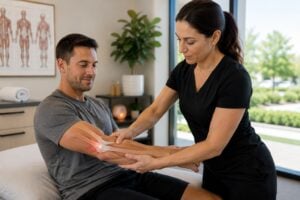
Applies sustained pressure to specific knots that cause pain and restriction.
Sports Massage
Enhances recovery and prevents injury in active individuals.
Each technique plays a role in restoring balance to the hip and lower body.
Benefits of Massage for Hip Mobility and Injury Prevention
When your hips move freely, everything else improves.
- Increased flexibility and range of motion
- Reduced pain and stiffness
- Improved posture and alignment
- Enhanced athletic performance
- Lower risk of injury
- Faster recovery after workouts
Massage doesn’t just fix problems, it prevents them.
Who Needs Hip-Focused Massage Therapy the Most?
This type of therapy isn’t just for athletes. It’s beneficial for a wide range of people.
Desk Workers
Sitting for long hours leads to chronic hip tightness and postural issues.
Athletes & Active Individuals
High physical demand increases the risk of overuse injuries.
People with Chronic Pain
Conditions like lower back pain often stem from hip dysfunction.
Aging Adults
Maintaining mobility becomes increasingly important over time.
Massage vs. Exercise: Why You Need Both
Massage and exercise are not competing solutions, they are complementary.
Exercise strengthens muscles and improves stability.
Massage restores tissue quality and mobility.
Without massage, tight tissues limit your progress.
Without exercise, the problem eventually returns.
Together, they create long-term results.
How Often Should You Get Massage for Tight Hips?
The ideal frequency depends on your lifestyle and goals.
- Chronic pain or severe tightness: Weekly sessions
- Moderate tightness or active lifestyle: Bi-weekly
- Maintenance and prevention: Monthly
Consistency is key. One session helps, but regular care creates lasting change.
The Anatomy of the Hips: Why This Area Gets Tight So Easily
To truly understand why tight hips are so common, you need to look at the anatomy.
The hip is not just one muscle, it’s a complex network that includes:
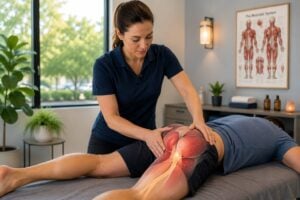
- Hip flexors (iliopsoas)
- Glute muscles (maximus, medius, minimus)
- Deep rotators (including piriformis)
- Tensor fasciae latae (TFL)
- Adductors
These muscles work together to stabilize and move your body in multiple directions. Because of this complexity, even a small imbalance can create widespread dysfunction.
Massage therapy targets these interconnected tissues, restoring harmony across the entire system, not just one isolated muscle.
The Role of Fascia in Hip Tightness
Fascia is often the missing piece in most conversations about mobility.
This connective tissue wraps around every muscle, organ, and joint in your body. When it becomes tight or dehydrated, it restricts movement and creates stiffness.
Unlike muscles, fascia doesn’t respond well to stretching alone. It requires sustained pressure and manipulation, which is exactly what massage therapy provides.
Releasing fascial restrictions can feel like unlocking a hidden layer of mobility you didn’t even realize was missing.
How Tight Hips Affect Athletic Performance
If you’re active, tight hips don’t just cause discomfort, they limit your performance.
Restricted hips can lead to:
- Shortened stride length in runners
- Reduced power output in lifting
- Limited range in squats and lunges
- Poor balance and coordination
Massage therapy improves tissue elasticity and joint mobility, allowing athletes to move more efficiently and generate more power.
In many cases, improving hip mobility leads to immediate performance gains.
The Connection Between Tight Hips and Lower Back Pain
One of the most overlooked causes of lower back pain is hip dysfunction.
When the hips don’t move properly, the lower back compensates. This added strain leads to stiffness, inflammation, and chronic discomfort.
Massage therapy helps by:
- Releasing tension in surrounding muscles
- Restoring proper movement patterns
- Reducing strain on the lumbar spine
Instead of treating back pain in isolation, addressing the hips often provides more lasting relief.
At-Home Tips to Support Hip Mobility Between Sessions
Massage therapy works best when supported by daily habits.
- Take breaks from prolonged sitting
- Incorporate gentle mobility exercises
- Stay hydrated
- Use foam rolling for maintenance
- Practice mindful movement
These small actions reinforce the benefits of professional treatment.
When to Seek Professional Help
If your hip tightness is persistent, worsening, or affecting your daily life, it’s time to seek professional care.
Early intervention prevents minor issues from becoming chronic problems.
Final Thoughts: Restore Movement, Eliminate Pain
Tight hips are more than an inconvenience, they are a signal from your body that something needs attention.
Massage therapy offers a powerful, natural solution that goes beyond temporary relief. By addressing the root causes of tension, it restores balance, improves mobility, and helps you move through life with ease.
When your hips are free, your entire body follows.
FAQs
Can massage therapy really fix tight hips?
Yes, it addresses deeper issues like adhesions, trigger points, and fascia restrictions that stretching alone cannot.
How long does it take to see results?
Many people feel relief after one session, but consistent treatment provides lasting results.
Is deep tissue massage necessary for hip pain?
Not always, but it is highly effective for chronic tension and deeper muscle layers.
Can tight hips cause lower back pain?
Yes, hip dysfunction often leads to compensation in the lower back.