Imagine your mind, your digestion, and your skin as a three-way conversation happening 24/7. What you eat affects your mood. Your mood affects your hormones. Your hormones affect your skin. It’s not science fiction, it’s the gut-brain-skin axis, a biological reality now gaining traction in both medical and holistic wellness spaces.
But here’s what’s often overlooked: this complex system can be regulated and supported not only by nutrition or medication but by the power of therapeutic massage.
Massage, often regarded as a luxury or stress relief tool, can actually act as a catalyst for restoring balance within this powerful triad of gut, brain, and skin. Let’s explore how.
What Is the Gut-Brain-Skin Axis?
The gut-brain-skin axis is a communication network involving your digestive system, your central nervous system (especially your brain), and your skin which is the largest organ of the body.
This system is regulated by:
- Neurotransmitters (like serotonin and dopamine),
- Hormones (like cortisol and estrogen),
- The vagus nerve, and
- The microbiome — a collection of trillions of beneficial bacteria living in the gut and on the skin.
Here’s a simple example: if you’re under chronic stress, your body may reduce blood flow to the gut (disrupting digestion), elevate cortisol (causing inflammation), and this can trigger breakouts, rashes, or flare-ups in conditions like eczema or psoriasis.
The result? A body-wide ripple effect that starts in one place and ends in another. But thankfully, these systems can be gently recalibrated and massage therapy plays a surprisingly influential role.
The Role of Stress in Gut, Brain, and Skin Health
Stress is the ultimate disruptor of the gut-brain-skin axis.
Chronic stress can:
- Trigger gut dysbiosis (an imbalance of good vs. bad bacteria)
- Spike inflammatory markers (impacting skin clarity and aging)
- Suppress mood-regulating neurotransmitters
- Contribute to tightness and tension in the diaphragm and abdominal muscles
These effects aren’t just physical. Emotional stress leads to real physiological changes including slowed digestion, poor sleep, anxiety, and acne-prone or inflamed skin.
Massage offers a science-backed antidote to this chain reaction by activating the parasympathetic nervous system, lowering cortisol, and improving gut motility and mental equilibrium.
How Massage Therapy Influences the Gut-Brain-Skin Connection
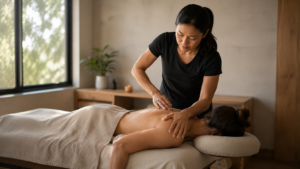
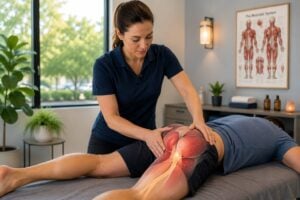
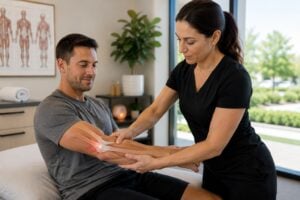
Massage therapy is a multi-systemic intervention. It means it doesn’t just help muscles; it modulates the nervous, endocrine, digestive, and integumentary (skin) systems.
Let’s break that down:
- Massage reduces sympathetic (fight-or-flight) dominance
- Stimulates vagal tone, improving communication between the gut and brain
- Enhances circulation, delivering oxygen and nutrients to the skin
- Decreases systemic inflammation
- Affects the gut microbiome indirectly via stress relief and digestion support
The result? A calmer mind, a happier gut, and clearer, more resilient skin.
Vagus Nerve Stimulation and Parasympathetic Healing
The vagus nerve is the star of the gut-brain axis. It runs from the brainstem down to the gut, sending signals about hunger, inflammation, and stress.
Massage therapy, especially techniques focused on the neck, back, and abdomen, can:
- Stimulate the vagus nerve
- Promote digestion (peristalsis)
- Improve heart rate variability (a sign of stress resilience)
- Reduce inflammation-related skin issues
In holistic bodywork, stimulating the vagus nerve is often the “hidden key” to resetting your entire nervous system and restoring natural healing rhythms.
Massage Techniques That Support Gut Health
Certain massage techniques go beyond relaxation and directly benefit digestive function. These include:
Abdominal Massage
Gently applied over the stomach area, abdominal massage can:
- Relieve bloating, gas, and constipation
- Stimulate digestive enzymes
- Improve gut motility
- Activate the enteric nervous system (the “second brain” in your belly)
Reflexology
By stimulating pressure points on the feet and hands, reflexology helps:
- Alleviate stress in corresponding organs
- Balance internal systems
- Encourage lymphatic drainage (removing toxins that affect skin)
Myofascial Release
Targeting adhesions in connective tissue, this technique:
- Enhances circulation to the gut
- Reduces tension in the diaphragm
- Encourages full-body alignment, improving energy flow
These gut-focused methods are not only soothing but can transform digestion over time.
Massage Benefits for Emotional Wellness and Mental Clarity
Your brain and gut produce about 95% of your serotonin — the “feel-good” neurotransmitter. When digestion is off, or when you’re chronically stressed, serotonin dips, impacting mood, focus, and even confidence.
Massage helps by:
- Elevating serotonin and dopamine levels
- Regulating the hypothalamic-pituitary-adrenal (HPA) axis
- Improving sleep, which is critical for brain detox and skin regeneration
- Enhancing mindfulness, grounding you in your body
In a world driven by mental overdrive and screen fatigue, massage becomes a mental detox just as much as a physical one.
How Massage Therapy Affects Skin Health from Within
Glowing skin is more than what you apply topically, it reflects what’s happening inside. When your gut and nervous system are inflamed, your skin can’t thrive.
Massage therapy supports skin health by:
- Increasing lymphatic drainage (reducing puffiness, clearing toxins)
- Improving circulation, giving your skin more oxygen and nutrients
- Reducing cortisol, which can trigger oil production and acne
- Enhancing collagen production through stress reduction and better sleep
Clients often report smoother, brighter skin after several weeks of consistent massage especially when combined with gut-friendly lifestyle changes.
Integrative Case Studies and Client Outcomes
At Narayan Wellness in Pleasanton, we’ve seen firsthand how clients experience deep healing across the gut-brain-skin axis:
- A postpartum client struggling with hormonal acne and IBS symptoms saw relief after 6 sessions of lymphatic and abdominal massage paired with mindfulness coaching.
- A male client facing high workplace stress, bloating, and psoriasis found dramatic improvement in both digestion and skin clarity after bi-weekly myofascial therapy.
- An adolescent with anxiety and acne experienced better mood, digestion, and sleep after 4 weeks of reflexology and craniosacral therapy.
These aren’t coincidences, they’re the result of tapping into the body’s natural ability to self-regulate when supported correctly.
Why This Matters in Pleasanton’s Wellness Landscape
In Pleasanton and surrounding areas, tech-driven work and fast-paced lifestyles create high-stress, low-digestion environments.
Massage therapy tailored to support the gut-brain-skin connection isn’t just a luxury, it’s a necessity for holistic resilience.
By offering integrative modalities that support digestion, mental health, and skin renewal, Narayan Wellness helps Pleasanton residents feel aligned, inside and out.
Complementary Therapies to Boost Your Gut-Brain-Skin Harmony
Massage isn’t the only player in this axis. Consider adding these to your self-care plan:
- Probiotics and prebiotic foods (for microbiome health)
- Herbal adaptogens (like ashwagandha or holy basil)
- Infrared sauna or dry brushing (for skin detox)
- Breathwork and meditation (for vagal tone)
- Sleep hygiene tools (like magnesium or blue-light blocking)
But the best first step? Start with massage therapy that’s focused on whole-body balance.
Scientific Evidence Behind the Gut-Brain-Skin Axis
The concept of a gut-brain-skin connection is backed by emerging scientific research that validates what holistic healers have long observed: the body operates as an interconnected system. Studies show that gut microbiota composition directly influences both neurological and dermatological health. For instance, dysbiosis has been linked to anxiety, depression, and inflammatory skin conditions like eczema and rosacea.
A landmark study published in Frontiers in Microbiology detailed how the gut microbiota communicates with the brain via the vagus nerve, immune system, and microbial metabolites. This crosstalk also influences skin inflammation and immune responses. Meanwhile, research in Nature Reviews Gastroenterology & Hepatology highlights how stress disrupts gut integrity, affecting the skin barrier and immune function.
Massage therapy enters this equation by modulating the autonomic nervous system and reducing stress hormones that trigger gut and skin inflammation. It also improves lymphatic flow, potentially enhancing microbiome diversity and detoxification capacity.
Massage Therapy Protocols for Gut, Brain & Skin Conditions
Massage can be tailored to address specific conditions by targeting anatomical and neurological pathways. Here are detailed protocols:
For Irritable Bowel Syndrome (IBS):
- Abdominal Massage (clockwise motion, 10 minutes)
- Myofascial Release (targeting lower back, hips)
- Diaphragmatic Breathing + Massage to support vagus nerve tone
For Anxiety & Depression:
- Craniosacral Therapy (light touch around skull and spine)
- Swedish Massage (long, calming strokes to reduce cortisol)
- Foot Reflexology (stimulating brain-gut points)
For Acne & Eczema:
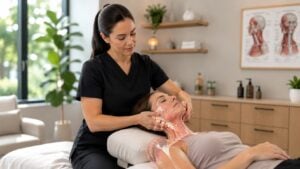
- Lymphatic Drainage (light circular motions on face and neck)
- Facial Massage with hypoallergenic oils
- Neck & Shoulder Massage to reduce systemic inflammation
For Menstrual Digestive Disruptions:
- Abdominal & Lower Back Massage
- Reflexology on reproductive and gut zones
- Trigger Point Therapy on sacrum and hips
Consistency (e.g., 1–2 sessions per week) amplifies results, especially when massage is combined with lifestyle changes.
Daily Wellness Rituals That Support the Axis
Supporting the gut-brain-skin axis doesn’t stop when the massage ends. Here are daily rituals that synergize beautifully with bodywork:
Morning:
- Warm lemon water with sea salt (gut priming)
- 5-minute vagus nerve stimulation via humming or cold splash
- Dry brushing for lymphatic support
Afternoon:
- Walk outdoors for 20 minutes (gut microbiome diversity)
- Grounding breathwork or 5-minute self-massage
- Herbal tea (ginger, chamomile)
Evening:
- Gratitude journaling to regulate stress
- Magnesium soak or foot massage
- Digital detox 1 hour before bed to restore melatonin
These rituals encourage nervous system regulation, gut balance, and skin rejuvenation while extending the effects of therapeutic massage.
Final Thoughts: A Massage-Centered Approach to Whole-Body Healing
The gut-brain-skin connection isn’t just a trend, it’s a fundamental framework for understanding health. And massage therapy, when applied intentionally, becomes one of the most accessible and effective tools to support this triad.
Whether you’re struggling with digestive discomfort, stress overload, or skin issues, remember: they’re all connected.
And when one system heals, the others can follow.
FAQs
What is the gut-brain-skin axis and how does it affect health?
The gut-brain-skin axis refers to the interconnected communication between your digestive system, nervous system, and skin. Disruptions in one area—like stress or poor gut health—can impact mental clarity and lead to skin issues. Balancing this axis improves overall wellness.
How does massage therapy influence the gut-brain connection?
Massage therapy activates the vagus nerve, promotes relaxation, and improves circulation. This reduces stress and inflammation, enhances gut motility, and improves mood, which positively influences the entire gut-brain axis.
Can massage therapy help with skin conditions like acne or eczema?
Yes, massage improves lymphatic drainage, lowers inflammation, and supports detoxification—factors that influence skin clarity and healing. Regular sessions, especially facial and lymphatic massages, can improve chronic skin conditions.
What massage techniques are best for digestive health?
Abdominal massage, reflexology, and myofascial release focused on the diaphragm and lower back are highly effective for relieving bloating, constipation, and IBS symptoms.
How often should I get massage therapy to support gut-brain-skin health?
For ongoing support, 1–2 sessions per week is ideal, especially when combined with gut-friendly nutrition and daily stress-reduction habits. Even monthly sessions offer benefits if done consistently.