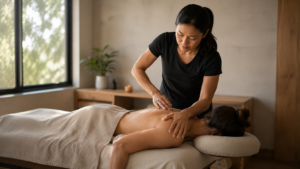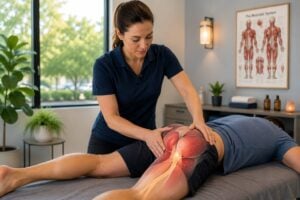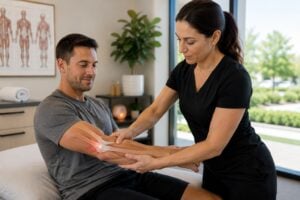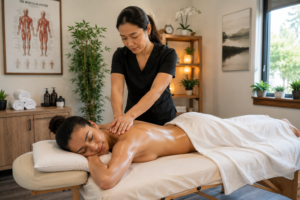
Post-traumatic stress disorder (PTSD) is often misunderstood as a condition that lives solely in the mind. But trauma leaves deep imprints on the body as well. Tense muscles, hyperarousal, chronic pain, and emotional numbness are just some of the ways the body “remembers” what the mind wants to forget.
Massage therapy offers a powerful, nonverbal path to healing trauma. It reconnects individuals with their physical selves, softens the grip of anxiety, and supports the nervous system in its journey back to safety. This article explores how massage can be a profound ally in PTSD recovery and emotional healing.
Understanding PTSD and Its Physical Manifestations
PTSD isn’t just psychological, it’s somatic. According to the National Institute of Mental Health, PTSD affects how the brain and nervous system respond to stress, often leaving individuals in a heightened state of “fight, flight, or freeze.”
Physical symptoms often include:
- Chronic muscle tension or pain
- Digestive issues
- Fatigue or insomnia
- Migraines or tension headaches
- Breath holding or shallow breathing
- Hypervigilance and startle response
These physical responses are the body’s way of protecting itself but when trauma is unresolved, the body can remain locked in these patterns long after the danger has passed.
The Science Behind Touch: Why Massage Helps Heal Trauma
Touch is one of the most primal forms of communication and safety. In therapeutic massage, intentional, respectful touch can regulate the autonomic nervous system, particularly the vagus nerve, which is responsible for calming the body.
Key physiological effects of massage on trauma survivors:
- Lowers cortisol: Massage significantly reduces cortisol (the stress hormone) while increasing serotonin and dopamine, natural mood stabilizers.
- Activates parasympathetic response: The body moves from “fight or flight” to “rest and digest,” promoting relaxation and restoration.
- Enhances proprioception: Gentle pressure brings awareness to the body, grounding dissociation and improving body-mind integration.
Massage doesn’t “erase” trauma, but it helps the body feel safe again which is a vital step in long-term healing.
What Is Trauma-Informed Massage?
A trauma-informed massage is an approach, not a technique. It involves creating a space where clients feel physically and emotionally safe, are given control and choice, and can receive bodywork without fear of re-triggering traumatic memories.
Core principles of trauma-informed massage:
- Consent and collaboration: Clients are part of every decision, from positioning to pressure.
- Non-judgment and compassion: Therapists hold space without needing details of the trauma.
- Awareness of triggers: Touch around certain areas (neck, inner thighs, abdomen) is approached with caution.
- Somatic sensitivity: Practitioners watch for signs of dissociation or overwhelm and adjust accordingly.
This approach is especially important for survivors of physical or sexual abuse, war veterans, first responders, and those with complex PTSD.
Key Massage Techniques for PTSD Recovery
Different massage modalities can be beneficial depending on the individual’s trauma history and comfort level. Here are several that are commonly used for emotional and trauma-related healing:
1. Swedish Massage
- Gentle, rhythmic strokes promote safety and relaxation
- Ideal for first-time clients or those dealing with anxiety and sleep issues
2. Myofascial Release
- Slow, sustained pressure helps release tension stored in fascia (connective tissue)
- Supports emotional release through gentle unwinding
3. Craniosacral Therapy
- Very light touch focused on the skull and spine
- Helps reset the nervous system and soothe hypervigilance
4. Lymphatic Drainage
- Calms the body while boosting immune and detox systems
- Gentle rhythm encourages connection with subtle body signals
5. Shiatsu or Acupressure
- Balances energy pathways, supporting emotional and energetic regulation
- Pressure can be adapted for sensitivity
Each modality offers different gifts. Often, therapists combine techniques based on the client’s needs and trauma history.
Emotional Release and Somatic Memory: What to Expect
It’s not uncommon for trauma survivors to cry, shake, laugh, or even feel numb during a massage. This is not a sign of “weakness”, it’s the body releasing stored emotion.
Emotional responses may include:
- Sudden tears or memories surfacing
- Changes in breathing or body temperature
- Feeling deeply calm, sleepy, or “spaced out”
These are signs that healing is happening on a somatic level. Therapists trained in trauma work will hold space with care, allowing the client to process at their own pace.
Creating a Safe Healing Environment
For massage therapy to be truly effective in trauma recovery, the environment must support safety, autonomy, and trust.
Trauma-informed environments include:
- A calm, private setting with soft lighting and soothing sounds
- Clear communication about boundaries and expectations
- Options for fully clothed bodywork (like Thai massage or craniosacral)
- Consistent check-ins and the ability to pause or stop at any time
This attention to safety creates the conditions for deeper healing to unfold naturally.
Client Stories: Real-Life Healing Through Therapeutic Touch
“Jenna, 36 — Assault Survivor”
“I used to disassociate constantly. I couldn’t feel my own body. My massage therapist helped me reconnect gently, slowly. For the first time in years, I feel safe in my own skin.”
“Marco, 52 — Military Veteran”
“The anxiety never left, even after therapy. But massage gave me something else — a sense of peace that I couldn’t find with words alone.”
These are just two examples among many. When massage is integrated with therapy, support groups, and other tools, it becomes a cornerstone of holistic recovery.
How to Choose the Right Massage Therapist for Trauma Recovery
Not all therapists are trained in trauma-informed care and that’s okay. But if you’re healing from trauma, it’s important to find someone who understands your needs.
Look for:
- Certifications in trauma-informed massage or somatic therapy
- Experience working with PTSD clients
- A warm, respectful, and grounded presence
- Willingness to communicate clearly and collaborate with your needs
Ask questions. Trust your gut. You deserve a healing space that feels right.
Integrating Massage into a Holistic PTSD Treatment Plan
Massage therapy is not a replacement for psychotherapy, medication, or other trauma treatments. Instead, it complements them especially for those struggling to feel safe in their bodies.
Consider pairing massage with:
- Talk therapy or EMDR (Eye Movement Desensitization and Reprocessing)
- Yoga or somatic movement practices
- Meditation and breathwork
- Nutritional and lifestyle support
A multidisciplinary approach acknowledges that trauma lives in every layer of a person, body, mind, and spirit, and heals best through integrative care.
The Polyvagal Theory and Massage: Understanding the Nervous System’s Role in Trauma
The Polyvagal Theory, developed by Dr. Stephen Porges, revolutionized how we understand trauma and healing. At its core, this theory explains how the autonomic nervous system responds to safety and threat and how therapeutic touch can gently rewire those responses.
Key Concepts of Polyvagal Theory:
- Ventral Vagal State: The “safe and social” state where we feel calm, connected, and grounded.
- Sympathetic State: Fight or flight mode such as heart racing, muscles tense, breath quickens.
- Dorsal Vagal State: Freeze or collapse such as shutdown, numbness, disconnection.
Trauma can trap the body in sympathetic overdrive or dorsal shutdown. Massage, especially trauma-informed massage, can help the body shift into the ventral vagal state. Through slow, rhythmic touch and a trusted environment, the nervous system learns: “It’s safe now.”
Research shows that stimulating the vagus nerve (which regulates heart rate, digestion, and emotional tone) increases vagal tone which is a key predictor of resilience and emotional regulation.
Therapeutic touch becomes a direct intervention, not just relaxation. It communicates safety to the nervous system, re-patterning years of chronic dysregulation.
Massage as a Somatic Therapy: Bridging the Gap Between Mind and Body
While talk therapy processes trauma cognitively, somatic therapies work through the body where trauma often hides. Massage is one of the most accessible somatic therapies, especially for those who struggle with traditional verbal processing.
Why Trauma Is Somatic:
- Trauma isn’t stored as narrative, it’s stored as sensation, posture, and reflex.
- People may intellectually understand that the danger is over, but their bodies still respond as if it’s not.
- Bodywork helps interrupt these unconscious patterns by bringing them into conscious awareness.
In this way, massage isn’t just relaxing. It invites the client to notice:
- Where they hold tension
- Where they feel numb
- What parts of the body they avoid or protect
As clients build this awareness, they begin to reclaim their bodies as safe spaces, often for the first time in years.
Massage bridges the body-mind gap, validating that healing doesn’t only happen through words. Sometimes, it starts with a breath, a release, a sigh.
Cultural Trauma and Bodywork: Addressing Collective and Intergenerational Wounds
Not all trauma is individual. Many carry the weight of intergenerational or collective trauma which is passed down through families, communities, or entire cultures due to racism, war, colonization, displacement, or systemic oppression.
Massage therapy can offer subtle but profound healing for these invisible wounds. While it doesn’t erase history, it:
- Restores agency over the body
- Offers a moment of control, rest, and dignity
- Validates the need for softness in a world that’s often hard
For BIPOC, LGBTQ+, and other marginalized clients, trauma-informed bodywork must include cultural sensitivity:
- Using inclusive language
- Respecting boundaries informed by cultural modesty
- Understanding the emotional weight of historical trauma in the tissues
Touch can be reparative when done with intention. In this way, massage becomes a quiet rebellion against systems that have dehumanized, ignored, or harmed and a pathway toward embodied resilience.
Final Thoughts: The Quiet Power of Compassionate Touch
Massage therapy doesn’t try to “fix” trauma. It listens, it supports, and it helps restore what trauma often steals: a sense of safety, trust, and embodiment.
For those living with PTSD, therapeutic touch can be a quiet revolution, one that bypasses words and meets the nervous system where it truly lives: in the body.
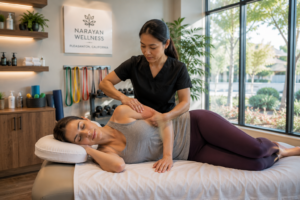
When done with care, like here in Narayan Wellness, trauma-informed massage is not just a treatment — it’s an invitation to come home to yourself.
FAQs
Is massage therapy safe for PTSD?
Yes, when performed by a trauma-informed therapist, massage therapy can be a safe and supportive tool for PTSD recovery. Consent, communication, and safety are key.
What types of massage are best for emotional trauma?
Swedish, craniosacral, myofascial release, and lymphatic drainage are commonly used, depending on the individual’s needs and sensitivity.
Can massage therapy trigger trauma memories?
It can, which is why a trauma-informed approach is essential. Therapists trained in this area know how to support clients gently if emotional release occurs.
How often should someone with PTSD get a massage?
It varies. Some benefit from weekly sessions, while others start monthly. A trauma-informed therapist will work with you to determine the right frequency.