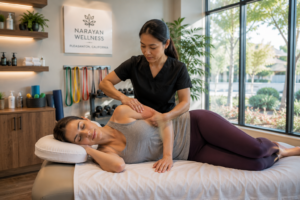
If your shoulders constantly feel stiff, heavy, or painfully tight no matter how much you stretch, you are far from alone. Chronic upper body tension has become one of the most common physical complaints among modern adults. From office workers and busy parents to athletes and students, shoulder tightness affects nearly everyone at some point.
But here’s the frustrating part: many people treat the symptoms without ever understanding the root causes.
They roll their shoulders, crack their neck, stretch for a few seconds, and hope the discomfort disappears. Sometimes it helps temporarily. Often it comes right back.
That’s because chronic shoulder tension is rarely caused by a single issue. It’s usually the result of overlapping factors including stress, posture, repetitive movement, nervous system overload, muscle compensation patterns, and even emotional tension stored in the body.
Understanding why your shoulders always feel tight is the first step toward achieving lasting relief.
Why Shoulder Tightness Has Become So Common
Modern lifestyles place enormous strain on the upper body. Human bodies were designed for movement, variety, and balance. Instead, many people spend hours each day:
- Sitting at desks
- Looking down at phones
- Driving
- Working on laptops
- Carrying stress in the neck and shoulders
- Sleeping in poor positions
- Repeating the same movements daily
The shoulders are incredibly mobile joints, but that mobility comes at a cost. Because they rely heavily on surrounding muscles for stability, they are particularly vulnerable to chronic tension and overload.
When muscles remain activated for long periods without proper recovery, they begin to tighten defensively. Over time, this tension becomes the body’s “new normal.”
That’s why many people wake up already feeling tight before their day even begins.
The Modern Lifestyle Problem Behind Chronic Shoulder Tension
One of the biggest contributors to chronic shoulder tightness is what many therapists call “modern posture.”
Imagine the average workday:
- Head pushed forward toward a screen
- Rounded shoulders
- Arms internally rotated
- Minimal movement for hours
This position places enormous stress on the trapezius, levator scapulae, rhomboids, pectorals, and neck muscles.
The body adapts to whatever position it spends the most time in. Eventually:
- Chest muscles shorten
- Upper back muscles weaken
- Neck muscles overwork
- Shoulder blades lose healthy mobility
This creates a chain reaction throughout the upper body.
The result is a constant sensation of stiffness, pulling, burning, or tightness that many people assume is simply part of adulthood.
It isn’t.
Stress, Anxiety, and the Shoulder Connection
Have you ever noticed your shoulders rising toward your ears during stressful moments?
That’s not accidental.
Stress activates the sympathetic nervous system commonly known as the “fight-or-flight” response. When this system stays activated for extended periods, muscles remain partially contracted as a protective mechanism.
The shoulders are one of the body’s primary “stress storage” areas.
Emotional stress can cause:
- Jaw clenching
- Neck stiffness
- Shoulder elevation
- Shallow breathing
- Tension headaches
- Upper back pain
Over time, the nervous system forgets how to fully relax.
This is why people under chronic stress often describe feeling:
- “Locked up”
- “Heavy”
- “Compressed”
- “Like I’m carrying weight on my shoulders”
Massage therapy becomes particularly powerful here because it addresses both the muscular and nervous system components simultaneously.
Poor Posture and the “Desk Body” Effect
Posture is not just about appearance. It directly affects muscular balance, circulation, breathing mechanics, and joint stress.
Forward head posture alone dramatically increases pressure on the upper spine and shoulders. For every inch the head shifts forward, the neck and shoulder muscles must support significantly more weight.
This leads to chronic overactivation of:
- Upper trapezius muscles
- Levator scapulae
- Cervical stabilizers
- Rotator cuff muscles
Meanwhile, supportive muscles in the mid-back weaken from underuse.
This imbalance creates what therapists commonly see as “desk body syndrome”:
- Rounded shoulders
- Tight chest muscles
- Weak upper back
- Neck stiffness
- Limited shoulder mobility
Without corrective treatment, the cycle continues to worsen.
The Hidden Role of Fascia and Trigger Points
Muscles do not work alone. They are surrounded by fascia which is a connective tissue network that helps support movement throughout the body.
When fascia becomes restricted due to stress, injury, inflammation, dehydration, or repetitive movement, it can contribute to:
- Reduced mobility
- Painful tension
- Trigger points
- Stiffness
- Radiating discomfort
Trigger points are hyperirritable spots within muscle tissue that can refer pain elsewhere.
For example:
- A trigger point in the shoulder may create headaches
- Neck trigger points may radiate into the arms
- Upper back restrictions may limit shoulder movement
This is one reason shoulder tension can feel widespread and difficult to pinpoint.
Massage therapy helps by improving tissue mobility, circulation, and fascial glide.
Why Stretching Alone Often Doesn’t Work
Many people assume tight muscles simply need stretching.
But chronic tension is often more complex than muscle length alone.
Sometimes muscles feel tight because:
- They are weak
- They are overcompensating
- The nervous system perceives danger
- Fascia is restricted
- Breathing patterns are dysfunctional
- Nearby joints lack stability
Aggressive stretching without addressing underlying causes may only provide temporary relief.
This explains why some people stretch daily yet still feel chronically tight.
Massage therapy helps interrupt these deeper patterns by:
- Reducing muscle guarding
- Improving circulation
- Downregulating stress responses
- Releasing trigger points
- Restoring tissue mobility
- Supporting nervous system recovery
Common Symptoms Associated with Tight Shoulders
Shoulder tension rarely appears in isolation.
People with chronic upper body tightness often experience:
- Neck pain
- Headaches
- Tingling into the arms
- Upper back stiffness
- Reduced range of motion
- Pain between shoulder blades
- Jaw tension
- Poor sleep
- Fatigue
- Burning sensations in the shoulders
- Stress-related discomfort
Some individuals also notice they breathe shallowly because tight chest and shoulder muscles restrict rib movement.
Over time, this can contribute to a cycle of stress and physical tension feeding each other continuously.
How Massage Therapy Relieves Chronic Shoulder Tightness
Massage therapy works differently than quick temporary fixes because it addresses multiple layers of tension simultaneously.
A skilled therapist can identify:
- Overactive muscles
- Trigger points
- Compensation patterns
- Fascial restrictions
- Areas of poor circulation
- Stress-related holding patterns
Treatment helps:
- Increase blood flow
- Relax overworked muscles
- Restore mobility
- Improve posture awareness
- Calm the nervous system
- Reduce inflammation
- Improve recovery
Many clients report not only physical relief but also mental clarity and emotional relaxation after treatment.
That’s because therapeutic touch influences both the body and brain.
Different Massage Techniques That Help Shoulder Tension
Different forms of massage therapy can target shoulder tightness in different ways.
Deep Tissue Massage
Deep tissue massage targets chronic muscular restrictions and adhesions within deeper muscle layers.
It is especially helpful for:
- Persistent knots
- Postural tension
- Chronic upper back tightness
- Restricted movement
Trigger Point Therapy
Trigger point therapy focuses on releasing hyperirritable muscle points that refer pain into surrounding areas.
This technique can help reduce:
- Headaches
- Neck pain
- Referred shoulder discomfort
- Arm tension
Myofascial Release
Myofascial techniques address restrictions within connective tissue rather than just muscles alone.
This can improve:
- Tissue glide
- Mobility
- Flexibility
- Overall movement quality
Relaxation Massage
Relaxation-focused massage helps calm the nervous system and reduce stress-related muscular guarding.
This is particularly beneficial for individuals whose shoulder tension is strongly connected to anxiety or emotional stress.
The Nervous System Connection: Why Relaxation Matters
One of the most overlooked aspects of chronic tension is the nervous system itself.
When the body perceives ongoing stress, it remains in a heightened protective state.
Muscles stay partially contracted.
Breathing becomes shallow.
Recovery slows down.
Massage therapy helps activate the parasympathetic nervous system which is the body’s “rest-and-digest” mode.
This shift encourages:
- Lower muscle tension
- Improved circulation
- Slower heart rate
- Better sleep
- Reduced cortisol levels
- Enhanced recovery
Many clients are surprised that their shoulders feel looser not just because muscles were worked on, but because their entire nervous system finally relaxed.
When Shoulder Tightness Becomes a Bigger Problem
Ignoring chronic tension can eventually lead to more serious dysfunction.
Long-term shoulder tightness may contribute to:
- Rotator cuff strain
- Shoulder impingement
- Chronic headaches
- Reduced mobility
- Thoracic outlet symptoms
- Nerve irritation
- Postural degeneration
The earlier these patterns are addressed, the easier they are to correct.
Persistent symptoms should always be evaluated professionally, especially if accompanied by:
- Numbness
- Severe weakness
- Sharp pain
- Loss of mobility
- Persistent radiating symptoms
Finding Professional Massage Therapy in Pleasanton
If you struggle with chronic shoulder tightness, working with an experienced therapeutic massage provider can help uncover the root causes behind your discomfort.
At Narayan Wellness Inc., therapeutic massage sessions are designed to address not only muscular symptoms, but also the deeper stress, posture, and movement patterns contributing to chronic tension.
For many people in Pleasanton, consistent massage therapy becomes an essential part of maintaining mobility, reducing stress, and improving overall quality of life.
Whether your tension comes from desk work, emotional stress, athletic activity, or chronic postural habits, personalized bodywork can help restore balance and comfort to the upper body.
Final Thoughts
Tight shoulders are not simply an unavoidable part of modern life.
They are often signals from the body that something deeper needs attention.
Stress.
Posture.
Movement habits.
Breathing patterns.
Muscle compensation.
Nervous system overload.
All of these factors interact together to create chronic upper body tension.
The good news is that lasting relief is possible when treatment addresses the root causes instead of temporarily masking symptoms.
Massage therapy offers a holistic, evidence-informed approach that supports both physical recovery and nervous system balance. For many people, it becomes one of the most effective ways to reduce pain, improve mobility, and feel more at ease in their bodies again.
FAQs
Why are my shoulders always tight even after stretching?
Chronic shoulder tightness is often caused by stress, posture, muscle imbalances, trigger points, and nervous system tension — not just lack of flexibility.
Can massage therapy help shoulder tension?
Yes. Massage therapy can improve circulation, release trigger points, reduce muscle guarding, and calm the nervous system to relieve chronic shoulder tightness.
What type of massage is best for tight shoulders?
Deep tissue massage, trigger point therapy, myofascial release, and relaxation massage can all help depending on the underlying cause of tension.
Can stress cause shoulder pain and tightness?
Absolutely. Emotional stress commonly causes the shoulders and neck muscles to remain partially contracted, leading to chronic stiffness and discomfort.
How often should I get massage therapy for shoulder tension?
Frequency depends on severity, lifestyle, stress levels, and physical demands. Many people benefit from regular sessions every 2–4 weeks for maintenance and prevention.