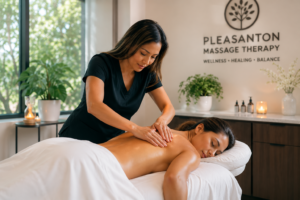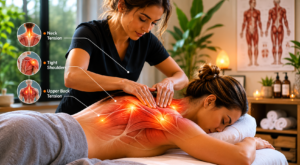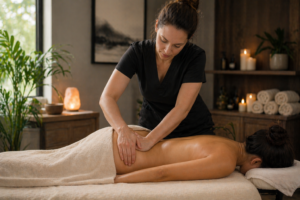
Lower back pain is one of the most common musculoskeletal complaints in the world. At some point in their lives, nearly 80% of adults experience significant lower back discomfort. Whether it’s a dull ache after sitting too long or sharp pain that limits movement, lower back pain can disrupt sleep, work performance, exercise routines, and overall quality of life.
The lower back, or lumbar spine, is a structural powerhouse. It supports your upper body weight, absorbs shock, and allows bending, twisting, and lifting. But because it works so hard, it’s also highly vulnerable to strain and dysfunction.
Many people in Pleasanton live active lifestyles such as balancing work, commuting, fitness, and family responsibilities. Prolonged sitting, stress, athletic training, and improper lifting can all contribute to lumbar strain. The question becomes:
Can massage therapy for lower back pain truly help?
The answer, supported by research and clinical experience, is yes, in many cases it can. But understanding how and when it helps requires a deeper look.
Acute vs. Chronic Lower Back Pain: What’s the Difference?
Before discussing massage for lower back pain relief, it’s important to distinguish between acute and chronic conditions.
Acute Lower Back Pain
Acute pain typically:
- Lasts less than 6 weeks
- Is triggered by strain, overuse, or sudden movement
- Feels sharp, tight, or inflamed
- Improves with rest and conservative care
This type of pain often results from lifting improperly, sudden twisting, or intense workouts.
Chronic Lower Back Pain
Chronic pain:
- Lasts longer than 12 weeks
- May persist even after tissue healing
- Often involves muscular imbalance, fascia restrictions, or nervous system sensitization
- Can feel dull, persistent, stiff, or deep
Chronic lower back pain treatment requires a more strategic and layered approach and this is where therapeutic massage can be particularly effective.
What Causes Lower Back Pain?
Lower back pain rarely comes from a single cause. It’s usually multifactorial. Common contributors include:
- Muscle strain or spasm
- Fascial adhesions
- Herniated or bulging discs
- Sciatic nerve irritation
- Poor posture
- Weak core muscles
- Prolonged sitting
- Stress-induced muscle tension
When muscles tighten or fascia becomes restricted, blood flow decreases and inflammation can increase. Over time, this creates a feedback loop: tension causes pain, pain causes guarding, and guarding causes more tension.
Massage therapy interrupts this cycle.
How Massage Therapy Works for Lower Back Pain
Massage therapy for lower back pain is not just about relaxation. It creates measurable physiological changes.
1. Improves Circulation
Increased blood flow delivers oxygen and nutrients to damaged tissues while removing metabolic waste. This accelerates recovery in both acute and chronic conditions.
2. Reduces Muscle Tension
Targeted pressure releases tight muscle fibers, reducing spasms and restoring range of motion.
3. Breaks Up Fascial Restrictions
Fascia is connective tissue that surrounds muscles. When it becomes restricted, movement feels stiff and painful. Skilled hands can help mobilize these restrictions.
4. Modulates the Nervous System
Massage stimulates the parasympathetic nervous system which is the body’s “rest and repair” mode. This reduces stress hormones like cortisol and lowers pain sensitivity.
5. Decreases Inflammation
Research shows massage can reduce inflammatory markers in muscle tissue after injury.
Together, these effects create meaningful, lasting relief for many patients.
The Science: What Research Says About Massage and Back Pain
Clinical studies support massage as a valid intervention for lower back pain.
Research published in leading medical journals has shown:
- Massage therapy significantly improves pain scores compared to usual care.
- Patients receiving massage report better function and mobility.
- Benefits often persist for weeks after treatment.
- Massage can be more effective when combined with exercise and posture correction.
The American College of Physicians recommends non-pharmacologic treatments, including massage, as first-line therapy for acute and subacute lower back pain.
This is significant.
Rather than relying immediately on medication, many patients benefit from conservative, hands-on care that addresses root muscular dysfunction.
Types of Massage That Help Lower Back Pain
Not all massage techniques are the same. The effectiveness depends on the type of pain and tissue involvement.
Deep Tissue Massage
Deep tissue massage targets deeper muscle layers and chronic tension patterns. It’s particularly helpful for:
- Chronic lower back pain treatment
- Postural imbalances
- Muscle adhesions
Trigger Point Therapy
Trigger points are tight knots within muscle fibers that refer pain elsewhere. Releasing these points can dramatically reduce discomfort.
Myofascial Release
Gentle sustained pressure improves fascial mobility and reduces stiffness.
Neuromuscular Therapy
Highly specific work addressing muscle-nerve interaction, especially useful when sciatic symptoms are present.
Relaxation Massage
Even lighter pressure massage helps reduce stress-related muscle guarding and nervous system hyperactivity.
A skilled therapist assesses whether pain is muscular, fascial, nerve-related, or postural before determining the most appropriate technique.
Massage vs. Physical Therapy vs. Chiropractic Care
Patients often ask how massage compares to other approaches.
Massage Therapy
- Focuses on soft tissue
- Reduces muscle tension
- Improves circulation
- Modulates nervous system
Physical Therapy
- Focuses on strengthening and mobility
- Includes corrective exercises
- Addresses biomechanical dysfunction
Chiropractic Care
- Focuses on spinal alignment
- Uses adjustments
- Aims to improve joint mechanics
These approaches are not mutually exclusive. In fact, many chronic lower back pain cases improve fastest when massage therapy complements physical therapy exercises.
Massage prepares tissue; exercise stabilizes it.
How Often Should You Get Massage for Lower Back Pain?
Frequency depends on severity and chronicity.
For Acute Pain
- 1–2 sessions per week initially
- Reassess after 2–3 weeks
For Chronic Pain
- Weekly sessions for 4–6 weeks
- Transition to biweekly or monthly maintenance
For Prevention
- Monthly sessions can maintain tissue health and prevent flare-ups
Consistency matters more than intensity. Occasional massage may feel good, but structured care creates sustainable results.
When Massage Therapy Is (and Isn’t) Appropriate
Massage therapy for lower back pain is highly effective for muscular and fascial issues. However, it may not be appropriate if:
- There is a spinal fracture
- There is severe disc herniation with neurological deficit
- There is active infection
- There is uncontrolled inflammation
In such cases, medical evaluation is necessary first.
A thorough intake ensures safe, personalized treatment.
Integrating Massage Into a Long-Term Back Care Plan
Think of massage not as a one-time fix, but as part of a strategy.
A comprehensive lower back care plan may include:
- Massage therapy
- Core strengthening
- Postural awareness
- Ergonomic adjustments
- Stress management
- Stretching routines
Lower back pain is often a signal, not the root problem. Addressing muscular tension while strengthening supportive structures creates long-term resilience.
Lower Back Pain Treatment in Pleasanton: Why Localized Care Matters
When searching for lower back pain treatment in Pleasanton, local expertise matters.
A practitioner familiar with the lifestyle patterns of Pleasanton residents, long commutes, tech work, active families, weekend athletes, can tailor care accordingly.
Localized care also allows:
- Ongoing progress tracking
- Personalized treatment plans
- Integrated referrals if needed
- Consistency in therapist-patient relationship
Massage therapy for lower back pain is most effective when it’s customized, not generic.
The Role of Stress, Posture, and Lifestyle in Lower Back Pain
Lower back pain is rarely just a structural issue. In many cases, it’s deeply connected to daily habits, stress levels, and movement patterns. Understanding this connection is essential for long-term relief.
Stress and the Nervous System
When you’re stressed, your body shifts into “fight or flight” mode. Muscles tighten automatically especially in the neck, shoulders, and lower back. Over time, this constant low-grade contraction reduces circulation and increases pain sensitivity.
Chronic stress can also heighten the brain’s perception of pain. This means that even mild muscular dysfunction can feel more intense. Massage therapy directly counteracts this pattern by activating the parasympathetic nervous system, lowering cortisol levels, and promoting relaxation at a neurological level.
Posture and Prolonged Sitting
Many professionals in Pleasanton spend hours seated at desks or commuting. Prolonged sitting shortens hip flexors, weakens glutes, and increases pressure on the lumbar spine. This imbalance pulls the pelvis forward, exaggerating the natural curve of the lower back and creating strain.
Massage therapy helps by:
- Releasing tight hip flexors and quadratus lumborum muscles
- Improving tissue mobility
- Reducing compensatory muscle guarding
However, combining massage with posture awareness and strengthening exercises dramatically improves outcomes.
Movement Patterns and Core Stability
Weak core muscles force the lower back to overwork. Without proper support from the abdominals and glutes, lumbar muscles absorb more strain than they’re designed to handle.
Massage reduces tension, but strengthening stabilizes progress.
Think of massage as resetting the system and corrective movement as maintaining it.
Addressing stress, posture, and movement alongside therapeutic massage transforms temporary relief into sustainable recovery.
Final Thoughts
Lower back pain is not simply a nuisance, it’s a signal from the body that something needs attention.
Massage therapy for lower back pain offers:
- Reduced muscle tension
- Improved circulation
- Nervous system regulation
- Decreased inflammation
- Enhanced mobility
Whether pain is acute from overexertion or chronic from years of posture imbalance, massage can be a powerful, evidence-based component of recovery.
When combined with movement, strengthening, and stress management, it becomes more than symptom relief, it becomes proactive care.
FAQs
Can massage therapy cure lower back pain permanently?
Massage addresses muscular and fascial contributors. If pain stems from posture or weakness, combining massage with corrective exercise provides longer-lasting results.
Is deep tissue massage painful?
It may involve discomfort, but it should never feel intolerable. Communication with your therapist ensures appropriate pressure.
How long does relief last after massage?
Relief may last days to weeks depending on condition severity and lifestyle factors.
Is massage safe for herniated discs?
In many cases, yes—but techniques must be modified. Always consult a trained therapist.
Can massage help sciatica?
If sciatic symptoms are caused by muscular compression (like piriformis syndrome), massage can be highly beneficial.